Control de habitaciones múltiples: calefacción inteligente en cada habitación
Con el Control de habitaciones múltiples, cada habitación de tu casa puede calentarse a su propia temperatura objetivo, de forma independiente. Con los Termostatos Inteligentes de tado°, esto ocurre de forma automática y precisa, directamente desde tu smartphone. Se acabó ajustar válvulas o temporizadores a mano. El resultado: menos energía desperdiciada, una factura de calefacción más baja y verdadero confort en cada habitación.
Tiempo de lectura:
12 min
Tabla de contenido:
•
¿Qué es el Control de habitaciones múltiples?
Con el Control de habitaciones múltiples, la temperatura no se gestiona de forma centralizada para toda la casa; se controla de forma independiente en cada habitación. La mayoría de los hogares ya cuentan con la infraestructura necesaria: las válvulas termostáticas de cada radiador detectan la temperatura de la habitación y reducen la calefacción en cuanto se alcanza la temperatura deseada.
El Control de habitaciones múltiples inteligente va más allá. El sistema calienta de forma proactiva. Puedes establecer un horario propio para cada habitación. Algunos dispositivos incluso aprenden tus hábitos y dejan de calentar en cuanto sales de casa. Cada habitación recibe la temperatura adecuada, en el momento adecuado. Esto se traduce en un ahorro energético considerable y hace que el día a día sea mucho más cómodo.
El Control de habitaciones múltiples con tado°
Hacer que tu calefacción sea inteligente con tado° es sencillo. El Control de habitaciones múltiples convierte tu caldera en un sistema conectado e inteligente, que ofrece mucho más que un simple ajuste de temperatura.
Vincular Habitaciones
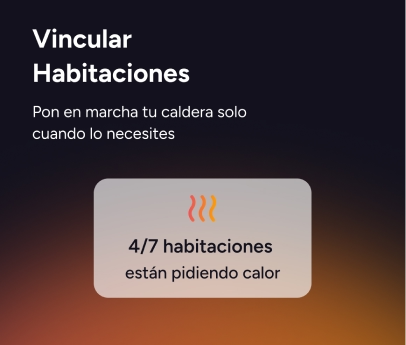
Vincular Habitaciones está en el centro del sistema de Control de habitaciones múltiples de tado°. Esta función sincroniza tu Termostato Inteligente, que controla la caldera, con todos tus Cabezales Termostáticos Inteligentes en cada habitación.
Así es como funciona: cada dispositivo tado° en tu casa puede pedir calor de forma independiente. Cuando una habitación necesita calor, el Cabezal Termostático Inteligente envía una señal al termostato inteligente conectado a tu caldera. La caldera se enciende, pero solo mientras al menos una habitación esté pidiendo calor. Esto evita que tu caldera funcione innecesariamente una vez que cada habitación ha alcanzado su temperatura objetivo. Al mismo tiempo, Vincular Habitaciones garantiza que cada habitación reciba calor justo cuando lo necesita.
Vincular Habitaciones está incluido gratis con la app de tado°.
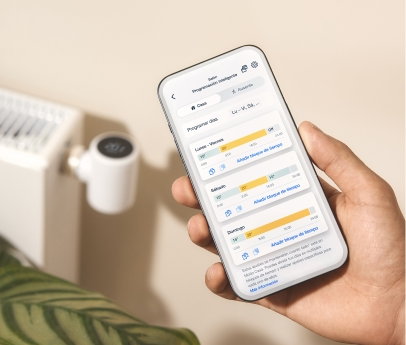
Programación Inteligente
Con la app de tado°, creas horarios de calefacción a medida para cada habitación. La app es intuitiva: ves todas tus habitaciones en un mismo lugar, y con un simple deslizador ajustas la temperatura de cada una, incluso a distancia.
Así es como podría verse en un hogar típico:
Dormitorio: 17 °C para dormir bien. Sube de temperatura automáticamente justo antes de que suene tu alarma.
Baño: la calefacción se enciende a las 7 de la mañana, perfectamente sincronizada con tu ducha matutina.
Despacho: una temperatura agradable durante el horario laboral, con una bajada automática una vez terminada la jornada.
Habitación infantil: los más pequeños necesitan más calor. Los adolescentes son otra historia: horarios individuales se adaptan a rutinas distintas.
Habitación de invitados: protección antiheladas cuando no se usa. Caliéntala desde la app solo cuando lleguen invitados de verdad.
La Programación Inteligente también es gratuita en la app de tado°.
El problema de un termostato único
Muchos hogares dependen de un solo termostato de pared para controlar todo el sistema de calefacción. En cuanto detecta una bajada de temperatura en un único punto, activa la caldera, que reparte el calor por igual entre todos los radiadores de la casa.
Esto genera varios problemas:
Energía desperdiciada: las habitaciones que apenas usas, una habitación de invitados, un trastero, se calientan igual que las que realmente ocupas.
Ninguna consideración de tu rutina: el baño necesita calor a primera hora de la mañana. El dormitorio, por la noche. El despacho, solo durante el día. Un termostato único simplemente no puede atender necesidades tan distintas.
Ninguna preferencia individual: a algunos les gusta el calor, otros prefieren el fresco. Un termostato único impone la misma temperatura a todos en casa.
Fuentes de calor externas ignoradas: el sol entrando por una ventana orientada al sur, el calor de los electrodomésticos, o una habitación llena de gente: un termostato central no puede reaccionar a ninguno de estos factores que influyen en la temperatura de una habitación.
Por qué el Control de habitaciones múltiples es tan útil
El Control de habitaciones múltiples inteligente resuelve estos problemas sin apenas esfuerzo. Sus principales ventajas son:
Ahorro energético real: calentar solo donde y cuando hace falta, con un Termostato Inteligente en cada habitación, reduce el consumo de forma notable.
Máximo confort: el baño está caliente cuando lo necesitas por la mañana, el dormitorio se mantiene fresco para dormir bien, el salón se calienta por la noche.
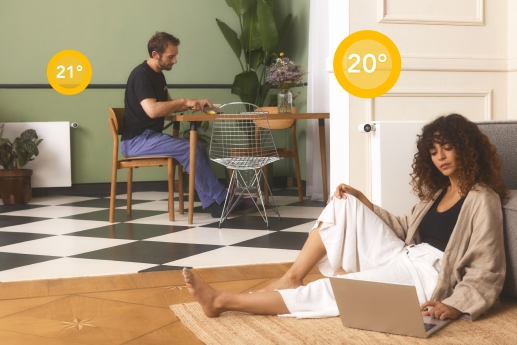
Preferencias individuales: cada persona puede ajustar su habitación a la temperatura que prefiera, de forma totalmente independiente del resto.
Respuesta a variaciones de temperatura: la temperatura se mide localmente en cada habitación. Si la cocina se calienta por el sol de la tarde, solo baja ese radiador.
Calefacción dirigida: la habitación de invitados se mantiene en modo antiheladas hasta que llegan invitados de verdad. Los pasillos reciben calefacción mínima.
Menos emisiones de CO₂: menos energía consumida significa una huella de carbono más pequeña. Cada grado cuenta.
Sistema estándar frente a Control de habitaciones múltiples
Característica
Sistema estándar
Control de habitaciones múltiples
Control de temperatura
Uniforme en toda la casa
Ajustado individualmente por habitación
Eficiencia energética
Baja (energía desperdiciada calentando habitaciones sin usar)
Alta (calor solo donde hace falta)
Confort
Un compromiso para todos
Máximo confort individual
Tiempo de respuesta
Más lento (reacciona todo el sistema)
Rápido (solo reacciona la habitación afectada)
¿Cómo funciona en la práctica el Control de habitaciones múltiples?
El mismo proceso ocurre en cada habitación: el termostato mide la temperatura y, si está más caliente o más fría que la temperatura objetivo, abre o cierra la válvula en consecuencia. Esto se basa en un bucle de control independiente en cada habitación.
Medición: un sensor de temperatura registra continuamente la temperatura actual de la habitación. Los sensores digitales modernos funcionan con una precisión de ±0,1 °C.
Comparación: el controlador compara la temperatura real medida con la temperatura objetivo. Esta puede ajustarse manualmente o de forma automática mediante un horario.
Regulación: si hay una diferencia, el controlador envía una señal al actuador. Si la habitación está por debajo del objetivo, la válvula se abre y deja pasar agua caliente. Una vez alcanzado el objetivo, la válvula vuelve a cerrarse.
Adaptación: el sistema reacciona de forma dinámica a los cambios, ya sea al abrir una ventana para ventilar, cuando sale el sol, o cuando sales de casa.
¿Cómo puedes controlar cada habitación por separado?
Existen tres opciones principales, cada una con capacidades distintas:
Los cabezales termostáticos mecánicos no ofrecen ninguna automatización y suelen ser imprecisos (±2-3 °C).
Los termostatos digitales permiten un ajuste preciso de la temperatura y horarios programables.
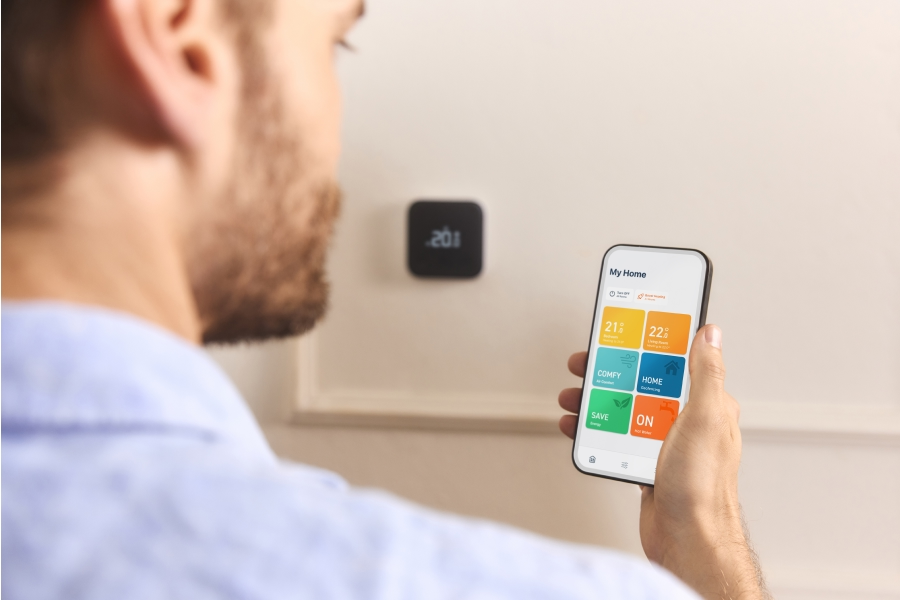
Los Termostatos Inteligentes, como los de tado°, se comunican entre sí y con tu smartphone. Ofrecen funciones inteligentes como la Geolocalización y la Calefacción Adaptativa, y se pueden controlar individualmente desde cualquier lugar a través de la app.
El Control de habitaciones múltiples con suelo radiante
Aunque el suelo radiante ofrece un confort excepcional, plantea exigencias particulares para cualquier sistema de control por habitación.
A diferencia de los radiadores, el suelo radiante reacciona muy despacio, un fenómeno conocido como inercia térmica. Las tuberías de calefacción están incrustadas en una capa gruesa de mortero, que actúa como un gran depósito térmico. Incluso después de cerrar la válvula, el suelo sigue desprendiendo calor durante horas. Por el contrario, una habitación fría tarda mucho en volver a calentarse. Esta inercia dificulta los ajustes espontáneos de temperatura, y los termostatos tradicionales suelen tener problemas para seguirle el ritmo.
Los sistemas modernos de suelo radiante inteligente funcionan de forma predictiva para compensar esto. En lugar de simplemente encenderse y apagarse, los termostatos modernos o inteligentes modulan progresivamente el aporte de calor. Empiezan a calentar la habitación con suficiente antelación para alcanzar la temperatura objetivo a tiempo. Algoritmos de autoaprendizaje, como los de tado°, analizan el comportamiento de calentamiento de cada habitación. En cuestión de días, el sistema sabe exactamente cuánta antelación necesita. El resultado: el suelo de tu baño está perfectamente caliente para tu rutina matutina, sin sobrecalentar y sin conjeturas.
¿Merece la pena el Control de habitaciones múltiples con una bomba de calor?
El Control de habitaciones múltiples y las bombas de calor forman una combinación excelente, aunque hay algunos puntos a tener en cuenta.
Una bomba de calor entrega energía de calefacción a temperatura constante. La temperatura de impulsión se ajusta de forma centralizada en los controles de la bomba de calor y se mantiene estable. El Control de habitaciones múltiples no modifica esa temperatura de impulsión; en su lugar, optimiza la demanda de calor abriendo y cerrando de forma selectiva los termostatos o las válvulas de zona en cada habitación.
La ventaja está clara: la bomba de calor responde a la demanda de calor total de la casa y ajusta su producción en consecuencia. Al calentar solo donde hace falta, el consumo eléctrico baja de forma medible. Como las bombas de calor están diseñadas para un funcionamiento estable y continuo, el Control de habitaciones múltiples favorece activamente un uso eficiente de la energía que producen.
Un punto importante: un correcto equilibrado hidráulico de tu instalación es un requisito para que el Control de habitaciones múltiples funcione de forma eficiente junto con una bomba de calor. El equilibrado hidráulico garantiza que cada radiador y cada circuito de calefacción reciba exactamente el volumen de agua que necesita, ni más ni menos.
FAQs
¿Cuáles son los mejores sistemas para un Control de habitaciones múltiples inteligente?
Los mejores sistemas combinan facilidad de uso, eficiencia energética e integración con el hogar inteligente. tado° es líder de mercado en Europa y ofrece sensores precisos, algoritmos de autoaprendizaje y un control fluido a través de la app. Al evaluar otras opciones, comprueba la compatibilidad con Matter para garantizar una integración duradera con tu hogar inteligente en su conjunto.
¿Puedo instalar el Control de habitaciones múltiples de tado° en mi sistema de calefacción actual?
Para radiadores: basta con sustituir los cabezales termostáticos antiguos por Cabezales Termostáticos Inteligentes X. Con tado°, la instalación tarda unos cinco minutos por radiador, sin necesidad de herramientas ni de un técnico. Para suelo radiante: instala un Termostato Inteligente X para cada zona de calefacción. Los actuadores existentes en el colector se conectan de forma inalámbrica a los nuevos termostatos. Los Termostatos Inteligentes inalámbricos de tado° se comunican a través del Bridge X con los Receptores Inalámbricos, sin necesidad de nuevo cableado a través de las paredes.
¿Funciona tado° con otros sistemas de hogar inteligente?
Sí. tado° es compatible con todas las principales plataformas de hogar inteligente, incluidas Amazon Alexa, Google Home y Apple HomeKit. tado° también es compatible con el estándar Matter, que permite una integración duradera con una amplia variedad de otros dispositivos y plataformas. Puedes integrar tu calefacción sin fisuras en tu hogar inteligente actual y controlarlo todo desde un mismo lugar.