Central heating distributes heat from a single source to warm your whole home evenly via radiators, underfloor systems, or air ducts, using water- or air-based methods. Key system types include oil, electric, and gas, each with distinct costs, efficiencies, and installation needs, and core components like boilers, pumps, radiators, and thermostats.
Leestijd:
12 mins
Inhoudsopgave:
Your heating can account for over half of your energy bill during winter months. Understanding how your central heating system works is the first step to reducing costs and improving efficiency. Replacing an outdated boiler or adding smart controls can make a significant difference.
This guide explains the different types of central heating systems available and how each one works. You'll learn about key components like boilers, pumps, and thermostats, plus discover how Smart Thermostats can help you optimise your system further and cut energy waste.
What is considered central heating?
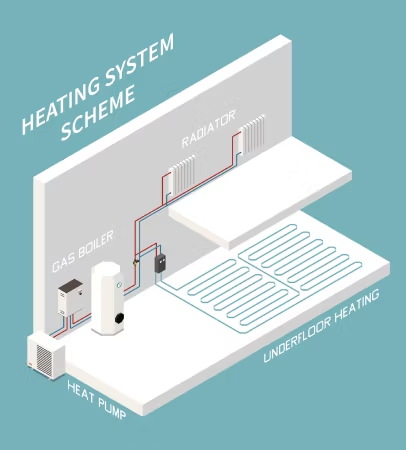
A central heating system distributes heat throughout the home from a single point. Warm water circulates throughout the home via a network of pipes, distributing heat evenly and effectively.
The pipe network might be connected to central heating radiators in each room. You also have the option of installing it underneath the floor, as with underfloor heating. Whichever system you choose, it releases heat gently throughout your home.
Most central heating systems connect to a central heating boiler. These work as an energy-efficient heat source, helping to keep energy bills low.
Homes without central heating often use radiant heat. They might also use in-floor or in-wall gas heaters, as well as electric baseboard heaters.
How do I tell if I have central heating?
A central heating system has radiators and pipework connected to a boiler. First, you should locate your boiler, which serves as the heat source. This might be in a kitchen cupboard, utility room or your garage.
From the boiler, a pump transports hot water through a system of pipework, arriving at the radiators in each room. It should be easy to find these radiators, which will be attached to a wall.
What are the different types of central heating systems?
There are several different types of central heating systems. These include:
Gravity-fed central heating systems: conventional systems, which uses gravity to pump and circulate water
Combination boiler systems: these heat both water and central heating at the source
Pressure system central heating: this is when water is moved using mains pressure
How does central heating work?
Water-based systems
Pipework and radiators connect to a boiler in a central heating system. The boiler generates heat and a pump transports this from the boiler to the radiators via the pipework. It then returns to the boiler for reheating. A central heating system might also provide hot water to your home's hot taps.
A primary heating appliance, such as a boiler or furnace, is located in an out-of-the-way location. This location might be a basement or a garage. It distributes heat in one of two ways:
Sending hot water or steam through pipes
Pumping warmed air through a duct system
This heat then moves to central heating radiators or a convector in each room.
A central heating thermostat controls your heating or cooling unit. Whichever system you have, it monitors room temperature changes.
Air-based systems
We’ve already looked at how water-based central heating systems work, but when it comes to air-based systems, there are two different types: forced air and gravity. Here is how a forced-air system works:
A boiler heats the air, or an air conditioner reduces the temperature of the air.
A heat pump either cools or warms the air.
A blower forces the cooled or heated air through the system.
The air goes out into your living spaces.
Gravity systems can only deliver warmed air. They have colossal air ducts, but no blowers.
A forced-air system can include either a heat pump or an air conditioner. This means that cooled air can be delivered through the same ductwork as would be used for heated air. There is also the option to transport electronically cleaned or humidified air.
What are the benefits of central heating?
Upgrading your heating system or installing a central heating system has many advantages. These include:
Health benefits
Environmental benefits
Comfort and convenience
Mould reduction
Central heating systems have been shown to have a positive influence and help prevent a range of common health problems. These include strokes, heart attacks, bronchitis, asthma and hypothermia. Central heating also protects your possessions. This is because it reduces mould growth and condensation, both of which are bad for your home and health. Storage heaters and other heater types have not proven to be nearly as effective in this regard.
Thermostatic radiator valves, room thermostats and timers can be used to help control central heating systems. This means you can choose different temperatures in each room or set a timer for your heating to activate at a specific time. As a result, you get to enjoy waking up at a comfortable temperature instead of having to wait for your heaters to warm up.
By now, you are probably already convinced of the advantages of a central heating system and are looking to make your life easier while providing your home with heat and hot water. But what are the options, and how do they work?
Which are the best central heating systems for UK homes?
There are three basic types of central heating systems:
Oil-fired central heating
Electric central heating
Gas central heating
Which heating system you should choose depends on:
Your existing home setup
The maximum operating costs you can afford
Whether a particular system suits your needs
Here are some of the best central heating systems to consider:
Oil-fired central heating
Like a gas boiler, oil central heating is known as a 'wet' system. This means an oil-fired boiler is used to warm water. The system then forces this water to travel through hot water taps or radiators. You have the option of either a combination boiler or an oil-fired heat-only system. Unlike a gas combination boiler, the former stores domestic hot water, meaning it does not heat it on demand.
Oil is a very efficient fuel, which means you save on every energy unit. Meanwhile, modern condensing boilers are now more efficient. They also recycle hot flue gases that would get wasted in a standard boiler. This makes it easy to have a modern and highly-efficient condensing boiler.
💡 tado° Tipp
Keep an eye on oil prices and then stock up as soon as they are low!
Oil-fired heating systems involve one of the following processes:
Warm air distributed through vents
Hot water circulated through a baseboard
Your thermostat will detect when the room temperature has dropped below the set temperature. At this point, it sends a signal to your heating system to turn on the heat.
When your oil burner is turned on, heating oil is pumped from the tank into the burner. Here, it mixes with air and turns into a fine mist. After this, the fuel/air mixture is injected into the burner. It is then ignited in the combustion chamber.
Oil-fired central heating offers the advantage of fuel efficiency. However, it has drawbacks including the need for fuel storage and exposure to price volatility.
Electric central heating
When you picture a central heating system, you’re probably thinking of a gas-fired boiler or water-filled radiators. However, these aren’t necessarily the most efficient ways to heat and the systems themselves can be difficult to program, leaving your home cold when you least expect it. Electric central heating offers a modern alternative, meaning it best suits modern homes and modern lifestyles.
One of the most appealing features of an electric heating system is the degree of control it provides. With traditional heaters you have to fire up the entire system, even if you only want to raise the thermostat by a few degrees in one room. This can prove costly.
Meanwhile with electric heating systems, all you need to do is turn on a single heater in the one room. This type of localised heating can be far more cost-effective.
Electric heating offers several advantages: it's modern, easy to program and control, and provides localised heating.
Gas central heating
Gas central heating systems are considered to be some of the quickest central heating systems on the market. Often praised for their energy efficiency, they have faster response times than electric systems. This means you feel the results right away. They can also heat water much more quickly than electric systems can.
However, central gas heating systems can expose your home to toxic by-products. Whenever you use a gas appliance, there is always a small risk of carbon monoxide poisoning. It’s definitely worth installing a carbon monoxide detector if you have this type of central heating system.
You also have to establish a gas supply to your home, which can add to the initial cost of this heating system. Whether it's propane or natural gas, you need to make sure you have a steady fuel supply. Installation can be a time-consuming and costly process, if you do not have an existing gas line.
Gas central heating provides the benefit of fast response times. However, it comes with significant drawbacks, including the risk of carbon monoxide poisoning and time-consuming, costly installation.
Components of a central heating system
Let’s take a moment to learn about the different components of a central heating system and why they are so important.
Central heating pump
A central heating pump is a small mechanical device in your central heating system. It speeds up the process of transmitting hot water from boilers to radiators and vice versa. A pump is a valuable tool for moving water around your home. Central heating pumps are at the heart of your central heating system.
They work by drawing water into the pump, pressurising it with impellers and pumping it around your heating system at a high speed.
Central heating boilers
Boilers are the most crucial component of your central heating system. They provide heating and hot water. It is essential to understand how they work and the different types and sizes available.
Boilers work in the same way whether they're powered by electricity, oil or gas:
Fuel is injected into a combustion chamber, where it is ignited.
This heat is transferred to a heat exchanger, which has a pipe or chamber of cold water running alongside it.
The water heats up as a result of the energy released by the ignited fuel.
What are the different types of central heating boilers available?
When it comes to your home, you can choose from three types of central heating boilers: heat only, system, and combi boilers. Most central heating boilers score highly when it comes to effectiveness, utility, affordability and efficiency.
Conventional
Traditional heating systems use conventional boilers. These boilers either run on gas or oil, if not they use electric resistance coils to heat the water. You pump hot water into a cylinder and store it for later use. This type requires a cold water storage tank, as well as an additional tank to ensure consistent water levels throughout the system.
System boilers
System boilersuse a hot water storage tank, meaning they function similarly to gravity-fed systems. However, they use water from your mains connection. This means, you do not need cold water storage. In addition, the boiler already includes several other components, saving space and simplifying installation.
Combi boilers
The newest type of boiler to hit the market, combi boilers heat water that comes directly from the mains water supply. This means they begin heating water as soon as you turn on the tap. As a result, you do not need storage tanks for hot or cold water.
Type
Hot water tank
Cold water tank
Conventional
✓
✓
System
✓
ⅹ
Combi
ⅹ
ⅹ
Tank requirements of the three most common types of boiler systems.
Central heating thermostat
A thermostat uses the central heating system to control the heating in your home. You can set your thermostat to your desired temperature, confident that your system will work to maintain it.
If the temperature falls below your chosen temperature, the thermostat will turn on the heat to warm up your home. It will turn off the heating when the temperature has reached your desired level. This prevents overheating and energy wastage.
Central heating radiators
Radiators are connected to a central heating system via pipes. Hot water flows through these pipes to the radiators. This hot water then heats the room through convection before flowing along to the next radiator in the chain.
Since the radiators in a central heating system link in a chain, the radiator closest to the boiler receives the hottest water. In contrast, the radiator at the other end of the chain sees some of the coolest water, as this is just before the hot water returns to the boiler.
Naturally, it is preferable to have all your radiators produce the same amount of heat. This is why you need to balance them until they operate in unison. You do this by adjusting the radiator valve to either constrain or open the water flow into a particular radiator.
How to make your central heating system more economical
Boilers come with controls that allow you to set the temperature you want. However, some also allow you to keep track of your energy usage. Learning to use these effectively is the key to maintaining a comfortable home, lowering your operating costs and increasing the energy efficiency of your system.
For example, most underfloor heating systems are controlled by a single wired thermostat in each room. It is important to be aware that existing room thermostats can be replaced with more efficient alternatives.
Optimising your central heating system with smart home integration
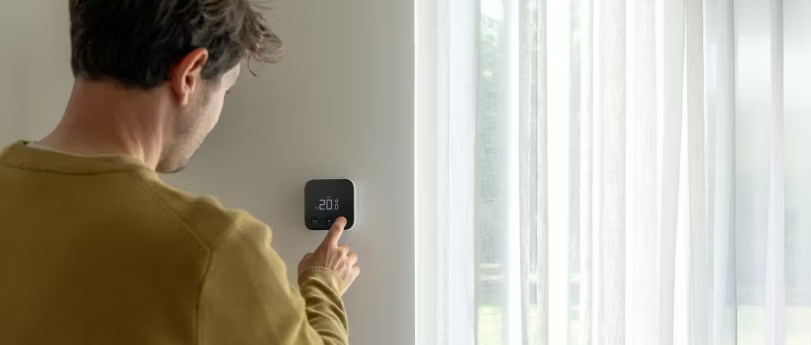
Smart home integration allows you to change your temperature settings remotely from anywhere. You can monitor the temperature using the touchscreen thermostat on the device or a smartphone app. As well as helping you maintain your optimal room temperature, smart heating offers a range of other benefits.
Central heating programmer
A central heating programmer is a programmable thermostat that allows you to set, not just the temperature in your home, but the times when your heating will operate. The programmer’s clock helps you to create daily or weekly schedules.
The great thing about this is that you can set the temperature based on whether you're at home or away at a particular time. You can also consider what you might be doing and factor in things like sleeping hours.
Smart Thermostat
Smart Thermostats can control your home's air conditioning, ventilation and heating. They help you to automate your home and allow you to control your heating through internet-connected devices, such as laptops or smartphones.
Smart Thermostats compatible with central heating:
The Wired Smart Thermostat takes the place of your existing wired room thermostat. It regulates the temperature in your room.
The Wireless Temperature Sensor controls the temperature wirelessly. It works in collaboration with your Smart Radiator Thermostats.
Conclusion
Whether you choose oil-fired, electric or gas, all central heating systems have their pros and cons. This is why it pays to consider optimising your system through smart home integration. Not only will you reduce your energy consumption and do your bit to help the planet, but your wallet will thank you when the heating bill arrives. Control your home’s temperature and get cosy in just a few taps with tado°.
FAQs
Do radiators count as central heating?
Radiators often form part of a central heating system when they are controlled by a single heat source, for example a boiler. However, individual heaters are not classed as central heating.
Is warm air heating classed as central heating?
Warm air heating or forced-air heating is classed as central heating because the heat comes from a single source and is transferred through ductwork.
How do I know if I have gas or electric central heating?
A gas boiler has to be connected to a gas supply and will require an exhaust vent. If you don’t have a gas line and you can’t see an exhaust vent, then your boiler is probably electric.