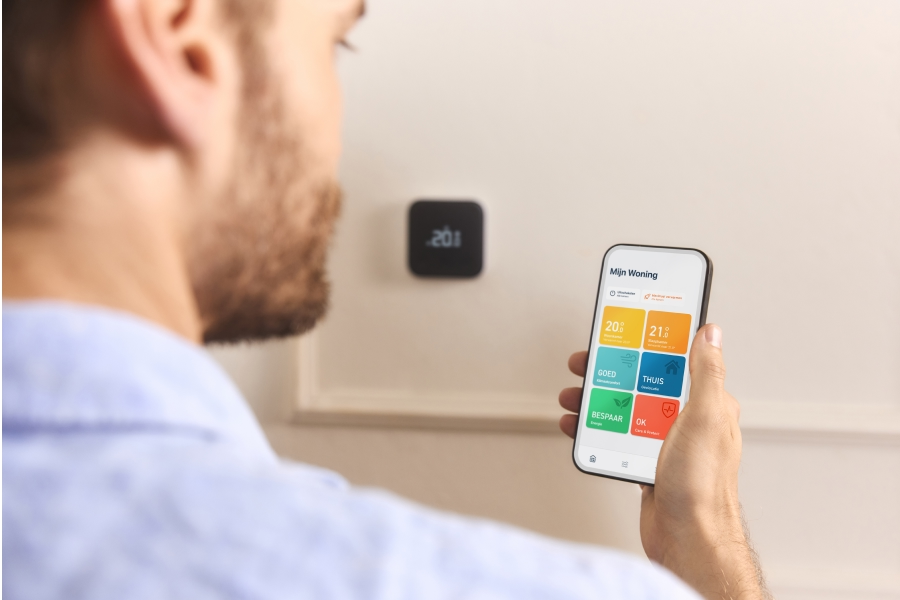
Heating thermostats measure room temperature and control your heating system to maintain comfortable, energy-efficient settings. Discover how they work and which type suits your home.
Leestijd:
8 mins
Inhoudsopgave:
•
What is a heating thermostat and how does it work?
A heating thermostat is a device that measures the room temperature in your home and controls your heating system to maintain a set temperature. It works by switching your boiler or heat pump on and off or adjusting its output based on how warm or cold the room is.
You probably have a preferred room temperature that helps you feel comfortable at home. Learning how to operate your heating thermostat gives you control of your heating system. These devices can reduce your energy consumption and improve your comfort and well-being.
Your thermostat is also a powerful tool to save energy during periods of rising energy costs. Let's break down what a heating thermostat is, the different types you can choose from, and how to make the best use of your heating thermostat at home.
How heating thermostats work
Understanding how your thermostat works helps you use it more effectively.
Modern electronic thermostats
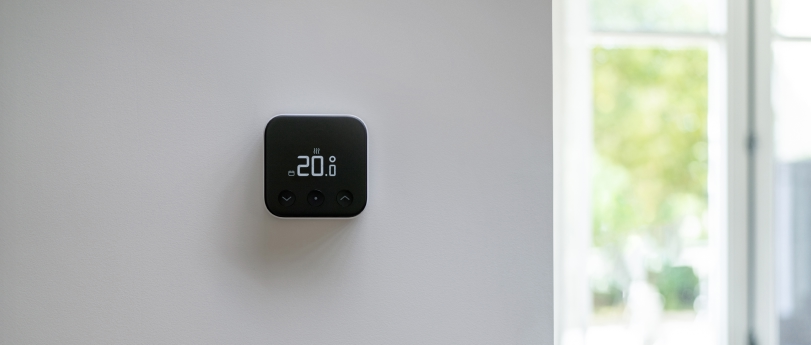
Electronic thermostats are commonplace in modern homes. They work like a small computer, using electronic sensors to detect your home's temperature accurately. These sensors continuously measure the room temperature and compare it to your target setting.
When the temperature drops below your set point, the thermostat sends an electronic signal to your boiler to start heating. Once the temperature reaches your target, it signals the boiler to stop. This cycle repeats automatically to maintain your desired comfort level.
Most modern electronic thermostats today include:
Digital displays showing the current and target temperature
Programmable settings for different times and days
WiFi connectivity for remote control via smartphone apps
Sometimes even smart features like learning your schedule and adapting to weather
Older electromechanical thermostats
Some older homes still have electromechanical thermostats. These use physical components rather than electronic sensors:
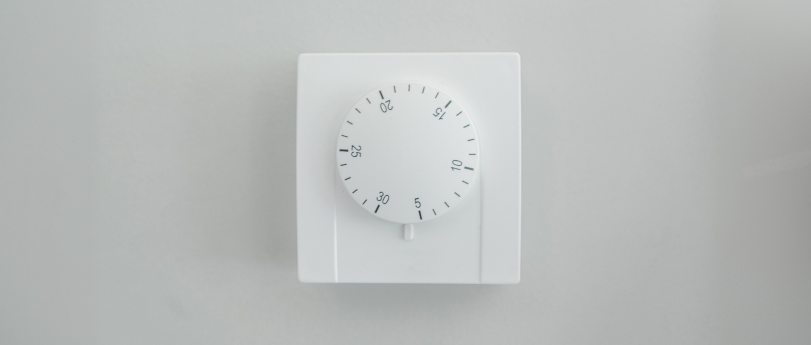
An electromechanical thermostat has a bi-metal coil or metal strip that bends when the temperature changes. In some models, a small vial of mercury tips from one side to another as the coil moves. This physical movement completes or breaks an electrical circuit, telling your boiler to start or stop heating.
While these thermostats work reliably, they're less accurate than electronic versions and don't offer programmable features or remote control.
tado° tip
Position your thermostat on an inner wall, away from windows, doors, radiators, and direct sunlight. Temperature sensors placed near heat sources or drafts will give inaccurate readings and cause your heating to cycle inefficiently, wasting energy. You can also use an additional wireless temperature sensor and place it wherever you need.
Types of heating thermostats
When choosing a thermostat, the first question is: what part of your heating system do you want to control?
There are two main types based on location and what they control:
Central heating thermostat (wall-mounted)
A central heating thermostat is a wall-mounted device that controls your entire heating system from a single point. It's the main thermostat that tells your boiler when to turn on and off for the whole house.
How it works:
The thermostat measures the temperature in one location (usually your living room or hallway) and controls the entire system based on that reading. When the temperature in that room drops below your set point, the boiler fires up and heats all the radiators in your home. When it reaches the target temperature, the system turns off.
Where it's located:
Mounted on a wall in a central location of your home, typically in the hallway or living room. This is the single control point for your entire heating system. You can also have multiple thermostats, for example one on each floor.
What it controls:
Your entire boiler. When this thermostat says "heat," every radiator in your home gets hot. When it says "stop," the whole system turns off.
Best for:
Homes with central heating systems (gas, oil, or electric boilers)
Simple, whole-house temperature control or zoned heating
Replacing an existing wall-mounted thermostat
Limitation: The temperature is only measured in one location. If that room gets sun in the afternoon and heats up, your boiler will turn off. Even if a single bedroom at the back of the house is still cold.
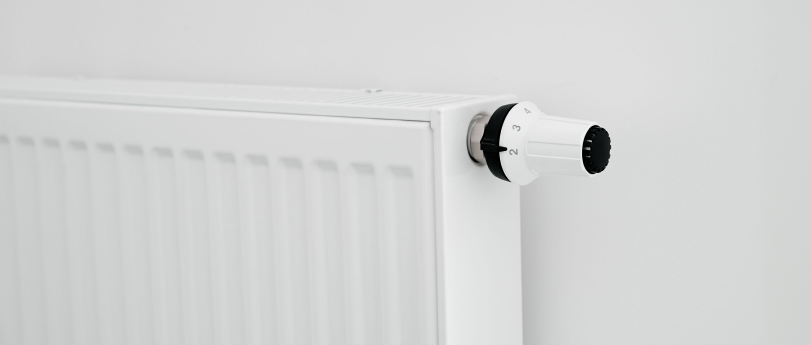
Radiator thermostats are devices that sit on each individual radiator and control the heat output of that specific radiator only. They don't control the boiler. They control the water flow through their radiator. Radiator thermostats work in combination with your central heating thermostat. The wall thermostat says "boiler, turn on." Then each radiator thermostat decides "do I need heat in this room or not?"
How they work:
Each radiator thermostat has its own temperature sensor and controls a valve that regulates water flow through that specific radiator. If the room is warm enough, the valve closes and water bypasses that radiator. If the room is cold, the valve opens and hot water flows through.
Where they're located:
Attached directly to each radiator, usually on the pipe at the side or bottom of the radiator.
What they control:
Only that individual radiator. Your boiler still needs a separate wall thermostat or timer to tell it when to run. The radiator thermostats then decide which radiators actually heat up when the boiler is running.
Benefits of multi-room control:
Radiator thermostats allow you to set different temperatures for different rooms. For example:
Keep your living room at 21°C during evenings
Maintain bedrooms at 18°C for better sleep
Heat spare rooms to only 16°C
Turn off radiators in unused rooms completely (e.g. guest rooms)
Multi-room control can reduce heating costs significantly compared to whole-house thermostats alone, because you're not heating rooms you're not using. You can learn more about multi-room control here.
Traditional vs modern radiator thermostats:
Radiator thermostats come in two versions: Older mechanical ones and newer digital/smart ones:
Traditional thermostatic radiator valves (TRVs) are the older, mechanical type found in most homes:
Contain wax that expands when hot, mechanically reducing water flow
Set manually using a numbered dial (usually 1-5, where 3 ≈ 20°C)
No power or batteries needed—purely mechanical
Imprecise temperature control (you don't know what temperature "3" actually means)
Must be adjusted manually on each radiator
Modern radiator thermostats are newer versions with digital displays and more features:
Set exact temperatures (e.g., "18°C" instead of "3")
Digital displays showing current and target temperature
Battery-powered with electronic control
More precise temperature regulation
Underfloor heating thermostat
Underfloor heating (UFH) can require specialized thermostats because it works differently from radiators. UFH systems heat and cool more slowly due to the thermal mass of the floor.
How they work:
In wet systems, the thermostat controls motorised valves on the underfloor heating manifold, regulating warm water flow to different zones. In electric systems, it controls the electrical supply to heating cables or mats beneath the floor.
Underfloor heating thermostats often include:
Floor temperature sensors (to prevent overheating the floor surface)
Longer pre-heating times (accounting for slow heat-up)
Zone control for different areas or rooms
Integration with your overall heating system
You can manage your UFH with wall-mounted controls, programmable controllers, or smart thermostats that connect via WiFi. As with other systems, modern IoT-enabled systems allow you to control everything from your smartphone.
Best for:
Wet or electric underfloor heating systems
Homes with multiple heating zones
Precise floor temperature management
tado° tip
Underfloor heating works best with lower target temperatures than radiators. Start with 19-20°C. The radiant heat from floors feels warmer than the same air temperature from radiators due to the way heat is distributed across the surface.
Electric heating thermostat
An electric heating thermostat controls standalone electric heaters or electric radiators, typically in rooms without central heating.
How they work:
These thermostats plug into an electrical socket and connect to your electric heater. They monitor room temperature and switch the heater on or off to maintain your desired temperature.
Best for:
Rooms without central heating (garages, workshops, conservatories)
Supplementary heating in cold spots
Rental properties where you can't modify the heating system
Quick installation without any wiring work
Setting up an electric thermostat is simple: plug it into a socket, connect your electric heater to the thermostat, and select your desired temperature.
Heating thermostat features: what to look for
When choosing a thermostat, you'll encounter various features. Here's what they mean and why they matter:
Programmable thermostats
Programmable thermostats let you set different temperatures for different times of day and different days of the week.
How they work:
You create a heating schedule, for example: warm in the mornings, cooler during work hours, warm again in the evenings, and cooler overnight. The thermostat follows this schedule automatically every week. Most programmable thermostats have digital displays and work with various heating systems.
Benefits:
Heat your home only when you need it
No need to remember to adjust the thermostat manually
Doesn't adapt automatically if your routine changes
No remote control if you're away from home
Smart thermostats (WiFi-connected)
Smart thermostats represent the next evolution in heating control. They connect to your home WiFi and offer advanced features that go beyond simple programming.
Smart thermostats are available for both wall-mounted central heating control and individual radiator control, for example:
Remote control: Adjust your heating from anywhere using a smartphone app. Change the temperature, switch heating on or off, or modify schedules without being at home.
Learning capabilities: Smart thermostats can learn how long your home takes to heat up and automatically adjust timing so you reach your target temperature exactly when needed.
Geofencing: Using your smartphone's location, the system knows when you're away and automatically switches to energy-saving mode. They turn your heating back on when you're heading home, so you arrive to a warm house without wasting energy while you're out.
Energy insights: Track your heating usage and costs over time. This helps you better understand your consumption and how you can save more energy.
Smart home integration: Connect with voice assistants (Alexa, Google Assistant, Siri) and other smart home devices.
Wired vs wireless installation
This refers to how the thermostat communicates with your boiler, not whether it has smart features.
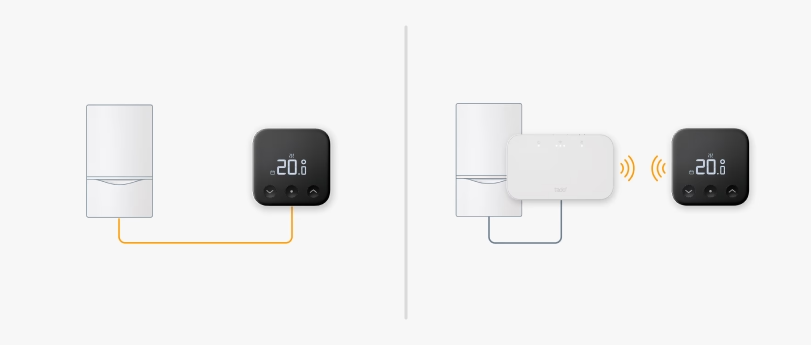
Wired thermostats:
Connect directly to your boiler with physical wires
Reliable connection with no signal interference
Require existing wiring or installation of new wiring
No batteries needed
If you have existing thermostat wiring, a wired model is typically simpler and more reliable
Wireless thermostats:
Communicate with your boiler via signal
Battery-powered wall unit (or plugged into mains)
Separate receiver unit connects to the boiler
Can be positioned anywhere within range
Easy installation, no wiring work needed
If you have no existing wiring or want flexibility in placement, choose wireless
Ideal temperature for a heating thermostat
The ideal temperature for your heating thermostat is around 20°, depending on the room and the time of day. We recommend a room temperature of at least 18°.
When your home's temperature is lower, it loses heat more gradually than if it were set to a higher temperature. In other words, maintaining a cooler indoor temperature helps your home hold heat longer, reducing the amount of energy necessary to maintain a pleasant temperature.
Optimal thermostat placement
Proper positioning is crucial for accurate temperature readings:
Do position your thermostat:
On an inner wall in a frequently used room
Away from drafts, direct sunlight, and heat sources
At approximately 1.5 metres height
In a location representative of your whole house
Don't position your thermostat:
Above radiators or near heating vents
Near external doors or windows
In kitchens (cooking creates heat spikes)
Near lamps or electronics that generate heat
Poor positioning can cause temperature swings and wasted energy. A thermostat in direct sunlight might measure 25°C while the rest of your home is 18°C, causing discomfort. You can expand your setup with an additional Wireless Temperature Sensor to control your optimal temperature with precision right where it matters.
Which tado° Smart Thermostat is best for my heating system?
tado° heating thermostats are compatible with virtually every heating system. Here's how to choose the right one:
tado° for boilers
If you have an existing wired thermostat:
The Wired Smart Thermostat X - Starter Kit replaces your current wall thermostat. It is compatible with most boilers and heat pumps (Relay or OpenTherm). You can also use it to control your water-based underfloor heating.
If you have no existing thermostat wiring:
The Wireless Smart Thermostat X - Starter Kit is compatible with most gas boilers and heat pumps (Relay or OpenTherm). Can be added to a boiler not wired to a thermostat yet or replaces your existing wireless thermostat.
tado° for radiators
Add Smart Radiator Thermostats to control individual radiators. These clip onto your existing radiator valves and work alongside your central thermostat or independently. No wiring required—they're battery-powered and communicate wirelessly.
tado° for underfloor heating
tado° thermostats work with most underfloor heating controllers, including:
Wired UFH manifolds
Wireless UFH systems
Multiple zone configurations
Not sure what heating thermostat best fits your system?
Use our product finder to identify the right products for your specific heating system.
FAQs
Do heating thermostats save energy?
Yes. Heating thermostats help reduce energy waste by switching your heating system on only when needed and turning it off once the set temperature is reached. Smart thermostats like tado° go a step further by using schedules, occupancy detection, and geofencing to optimise heating and reduce unnecessary energy consumption.
What’s the difference between a programmable thermostat and a smart thermostat?
A programmable thermostat lets you set fixed heating schedules for different times of day. A smart thermostat automatically adapts to your lifestyle, can be controlled via an app, and uses data such as occupancy and weather conditions to heat your home more efficiently.
What's the difference between WiFi, wireless, and digital thermostats?
These terms describe different features that can overlap:
WiFi thermostat: Connects to your home internet via WiFi, allowing remote control through a smartphone app and enabling smart features like weather adaptation and energy reports.
Wireless thermostat: Communicates with your boiler via radio signal instead of physical wires. The thermostat unit is battery-powered or plugged in, and a separate receiver connects to the boiler. Makes installation easier when you don't have existing wiring.
Digital thermostat: Has a digital display showing the exact temperature (like "19.5°C") rather than an analog dial or numbered settings. Provides more precise temperature control.
Many modern thermostats combine all three features – they have digital displays, connect wirelessly to the boiler, and connect via WiFi for smart control. For example, the tado° Wireless Smart Thermostat is digital, wireless, and WiFi-enabled.