


Brits Keep the Coolest Homes on the Continent - Even During a Cold January
New tado° data shows UK households heat their homes less than anywhere else on the continent, highlighting long-standing heating habits even as January temperatures plunge.

London, 29 January 2026: As much of the UK experiences a cold January, with temperatures in some areas reported to have fallen as low as –10 °C, new data from tado° shows that British households continue to keep their homes cooler indoors than their continental neighbours.
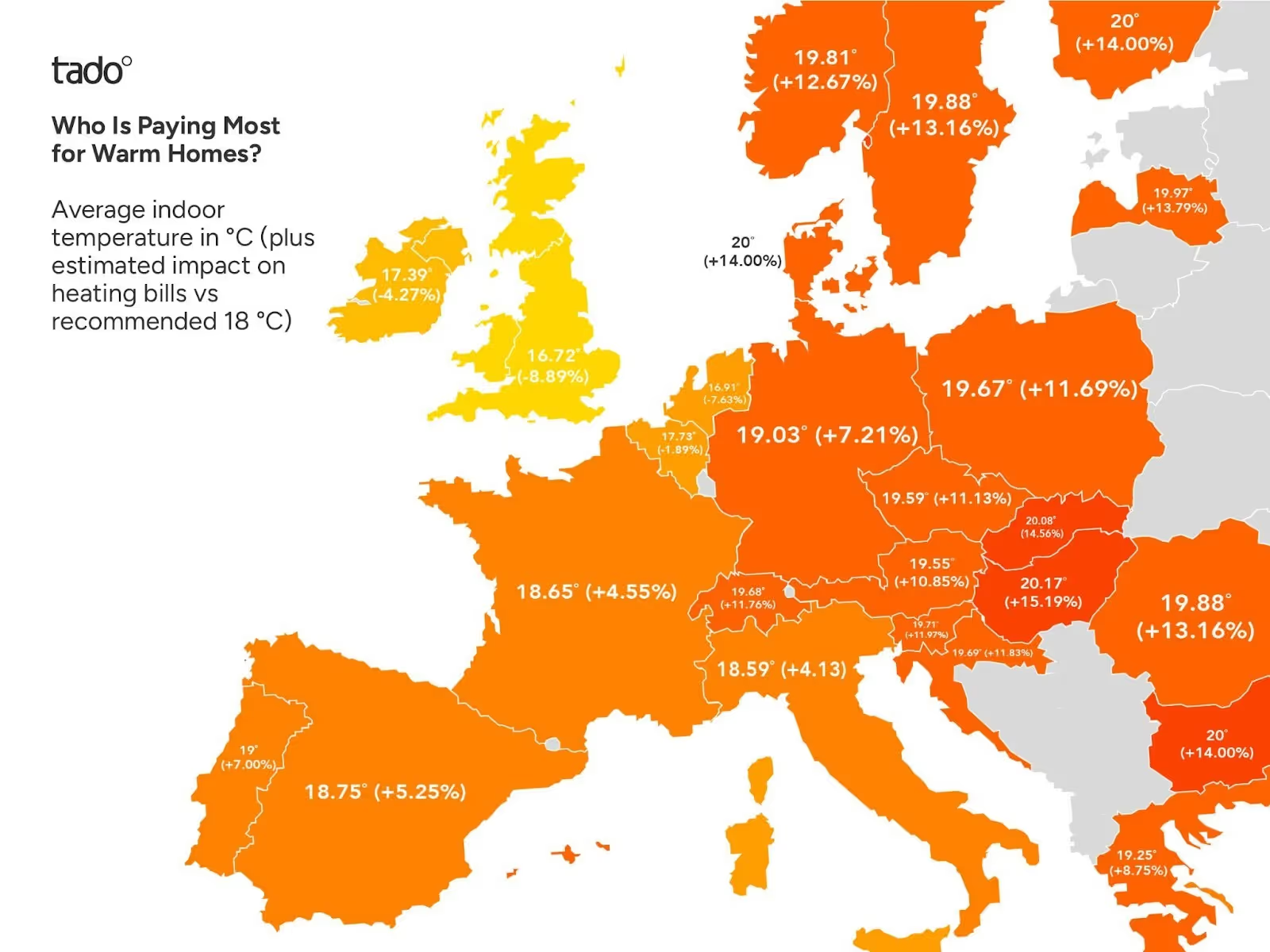
Despite the colder conditions outdoors, the average indoor temperature across the UK is 16.72 °C, more than 1 °C below the WHO-recommended 18 °C benchmark. This places the UK at the bottom of Europe rankings for indoor temperatures, indicating lower heating demand on average compared with households elsewhere on the continent.
Based on European Commission guidance that each 1 °C change in indoor temperature is associated with around a 7% change in heating use, the UK’s lower average indoor temperature reflects an 8.96% reduction in heating demand, before any insulation or efficiency improvements are taken into account.
The findings reflect real-world behaviour and do not suggest that colder homes are preferable or suitable for everyone, particularly during periods of severe winter weather.
Cooler homes even in colder weather
January is typically one of the coldest months of the year, and recent weeks have brought freezing conditions across large parts of the UK. Yet, despite colder outdoor temperatures, indoor heating habits remain relatively restrained.
Across much of the continent, households heat their homes more aggressively in winter. Countries in Northern, Central and Eastern Europe, including Denmark, Finland, Hungary and Slovakia, record average indoor temperatures at or above 20 °C, while the UK sits well below that level.
Compared with the warmest homes on the continent, the difference in heating behaviour between the UK and Europe’s warmest countries now approaches 25 percentage points, illustrating how relatively small thermostat choices can translate into large differences in heating use.
Even in southern European countries such as Spain, Italy and France, where winter weather is typically milder, average indoor temperatures tend to sit closer to - or above - the benchmark, showing that climate alone does not determine how people heat their homes.
How heating habits vary across the UK
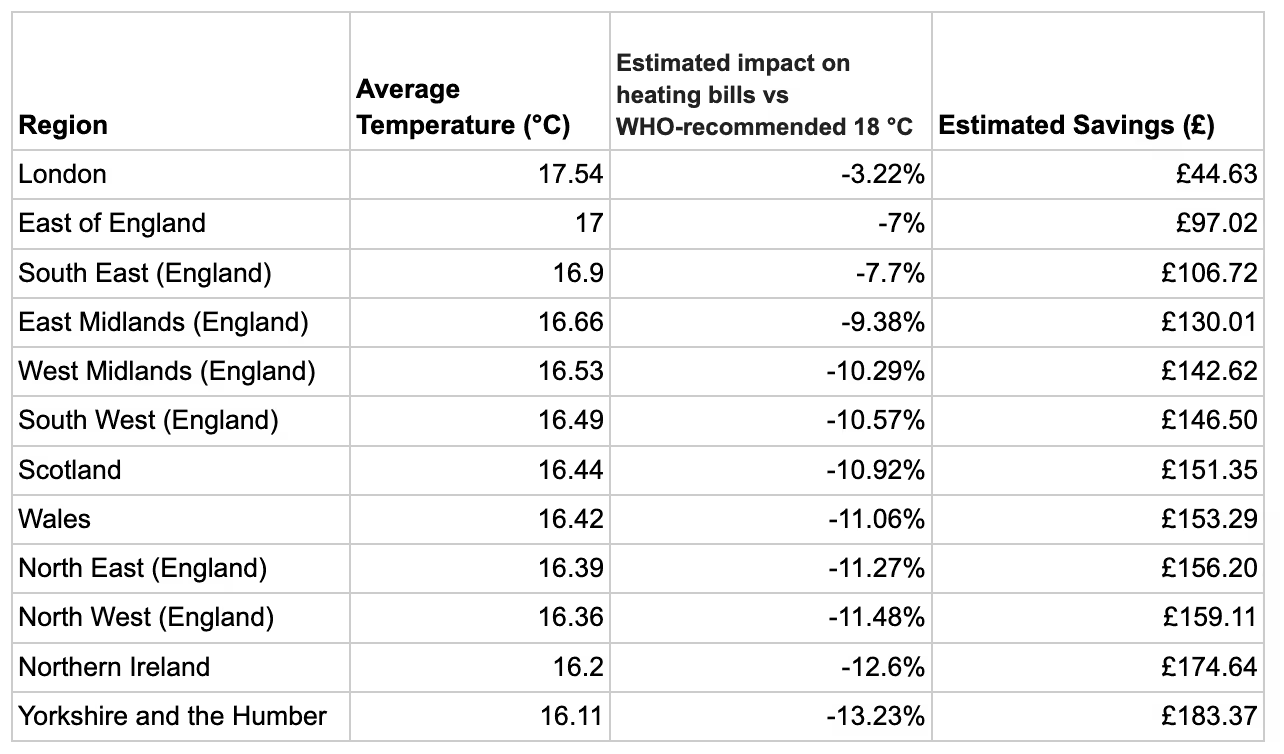
No region in the UK reaches the 18 °C benchmark. Even London, the warmest region, averages 17.54 °C, while much of the country runs considerably cooler.
Applying regional temperature differences to an average annual heating bill of £1,386, tado° estimates the following differences in heating use:
Why are British homes so cool?
Britain’s comparatively low indoor temperatures reflect a combination of long-standing economic, structural and cultural factors:
- A cultural tendency to heat sparingly
- Older, leakier housing stock, which is harder and more expensive to heat efficiently
- Behavioural changes adopted during recent winters that appear to have persisted
- Heightened awareness of energy use during colder months
With heating and hot water accounting for around 79% of household energy use, indoor temperature remains one of the most important drivers of household energy demand.
Staying warm efficiently
While lower indoor temperatures reduce heating use, temperatures below 18 °C may not be appropriate for everyone, particularly older adults, young children or vulnerable households.
The aim is not colder homes, but smarter, more efficient heating.
On average, tado° customers reduce heating costs by 22%, using features such as:
- Room-by-room control
- Smart schedules and geofencing
- AI-driven heating optimisation
- Open-window detection
- Precision control for older, harder-to-heat homes
“The numbers show that small differences in comfort can have a large impact,” said Christian Deilmann, Co-founder and Managing Director at tado°.
“Our goal is to help households understand how heating choices affect heating costs so they can. make informed decisions. Whether it’s saving money, cutting energy waste or staying cosy, people can choose what matters most to them - and smart control makes it easier to do all three.”
Press Material
High-resolution images found here.
About the data & methodology:
How the table was calculated:
- The analysis compares average indoor temperatures across UK regions with an 18 °C benchmark.
- Based on European Commission guidance, each 1 °C change in indoor temperature is associated with an approximate 7% change in heating use.
- Estimated percentage differences are calculated as:
- (Average indoor temperature} – 18) times 7
- Monetary equivalents use an average annual heating bill of £1,386.
Important notes:
- Results focus on healthy adults in temperate climates; higher minimum temperatures may apply for older adults or vulnerable groups.
- National averages may mask regional differences in home insulation, climate and heating systems.
About tado°
tado° is Europe’s leading home energy management company, helping households take control of their energy use and cut costs - no matter what heating or energy systems they use. Founded in Munich in 2011, tado° combines hardware, intelligent software and services into one easy-to-use platform.
tado° offers simple and efficient home climate management, intelligent electric vehicle charging, photovoltaic integration and dynamic energy tariffs - all while automatically shifting electricity consumption to the cheapest and greenest hours of the day.
Our vision is clear: energy in sync with nature.
(3) USwitch £1754 (average energy bill) x 0.79 (European Commission: heating is 79% of energy bill) = £1386
(4) tado research