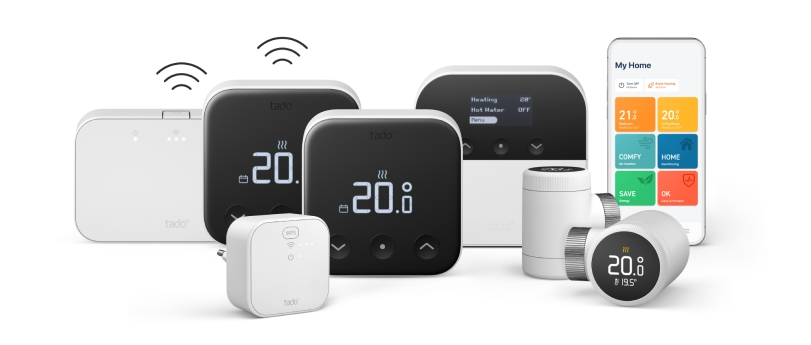
Central heating controls allow you to turn your heating on and off, set your preferred temperatures, and use timers to schedule your heating to operate automatically at specific times. If you're looking to take this one step further, smart thermostats like tado° offer app control, geofencing and weather adaptation, helping you to save significantly more energy while staying comfortable.
Read time:
12 mins
Table of contents:
•
Effectively controlling your home's heating system may seem complex, but learning to use your central heating controls correctly can significantly cut your energy bills. Setting your heating to run only when and where it's needed makes all the difference.
Central heating controls explained: the different types
Central heating controls aren't all the same. There are different components that can be used individually or in combination – and the more precisely you use them, the more efficiently your home heats up.
The most common types are:
Room thermostats
Hot water cylinder thermostats
Radiator thermostatic valves (TRVs)
Smart heating controls
Room thermostats
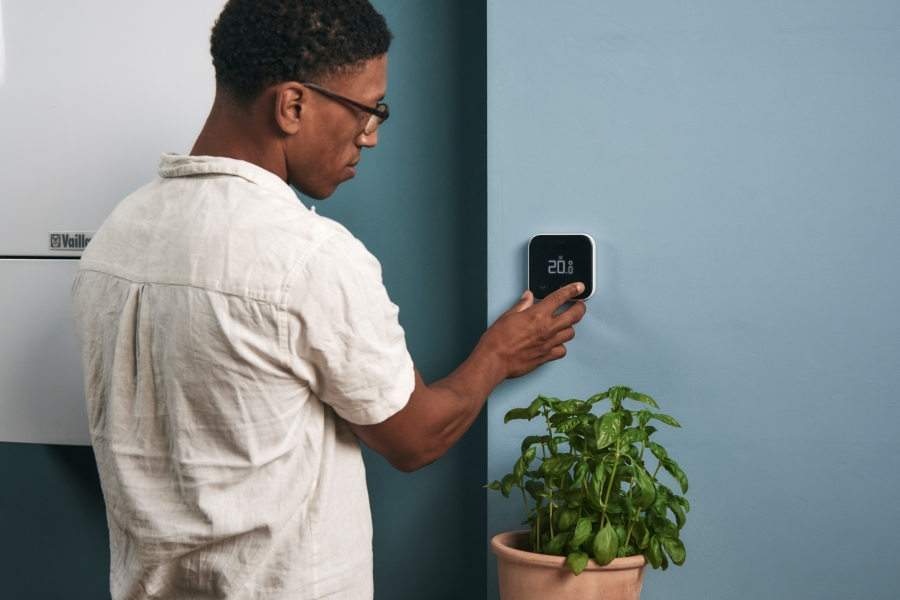
Typically, room thermostats are located in hallways or living rooms. Their role is to monitor the temperature and signal to the boiler when to switch off. Most people set their thermostat to between 18 and 21 degrees Celsius, as this is generally considered a comfortable range. Some modern heating controls combine a timer and a thermostat in one device, allowing you to set different temperatures at different times of day – these are known as programmable thermostats.
With a programmable thermostat, you can schedule your heating to turn on around 30 minutes before you wake up or get home, and switch off around 30 minutes before you no longer need it. A well-insulated home will heat up faster and retain warmth longer, so it's worth experimenting with your settings to find what works best for your household.
Hot water cylinder thermostats
Hot water cylinder thermostats help you manage the temperature of your hot water by switching off the heat input from your boiler once the desired temperature has been reached. This prevents energy waste caused by your water overheating and can lead to meaningful savings on your bills. Note: if you have a combi boiler, hot water is produced on demand – so you won't need a hot water cylinder thermostat.
Radiator thermostatic valves (TRVs)
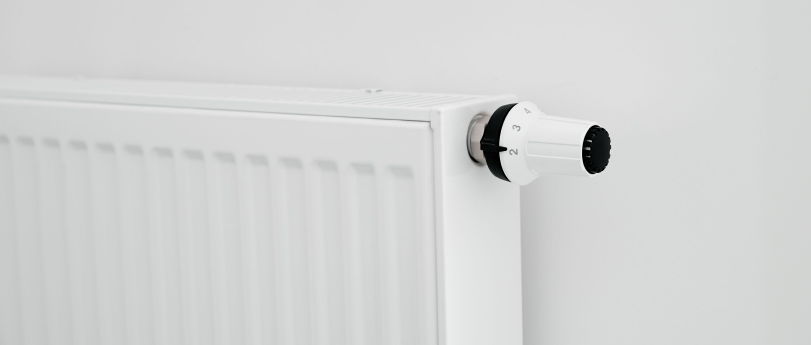
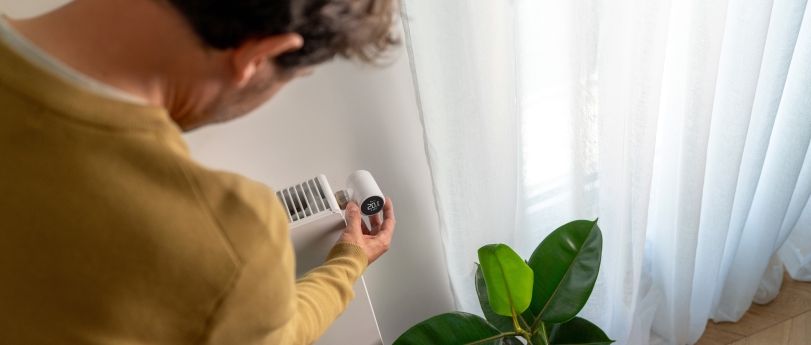
A thermostatic radiator valve (TRV) lets you regulate the temperature in individual rooms by controlling the flow of water through each radiator. For example, if you spend most of your time downstairs during the day, you can set the ground floor TRVs higher and the upstairs ones lower – heating exactly where you need it. It's generally not advisable to switch off radiators completely for weeks at a time, as cold rooms can develop damp and mould. Instead, turn them down and close the door to keep heat from escaping.
Smart heating controls
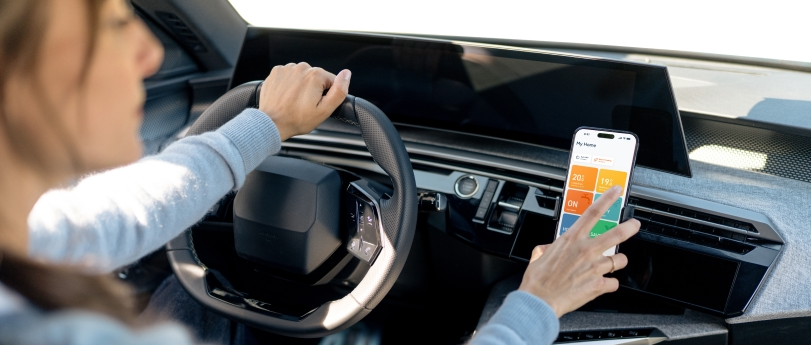
Smart homes are becoming increasingly common – and with that comes growing interest in smart heating. With an app on your smartphone or tablet, you can control your heating from anywhere. Smart systems let you adjust schedules on the go, manage different zones separately, and respond to changes in your day without wasting energy. Some apps go further: they use your phone's GPS to raise or lower the heating automatically depending on whether you're heading home or leaving. Others factor in the current weather forecast too.
An example: tado° Say your heating is set to come on at 6pm, but you're running late – no problem. You can simply delay the start time from your phone, so you're not heating an empty home. Family members can connect to the same account too, making it easy to manage heating across the whole household.
Mechanical, digital or smart thermostat – what's the difference?
Room thermostats and radiator valves come in a range of types – from basic to fully connected. Mechanical thermostats are the simplest option: they switch your heating on and off at set times – nothing more. Digital thermostats offer more flexibility: you can programme different temperatures for different times of day and days of the week, and in some cases manage multiple heating zones separately. Smart thermostats go one step further: they can be controlled via app from anywhere, adapt automatically to your behaviour and the outside temperature, and help you save energy without having to think about it.
Which central heating controls are suitable for my system?
The controls you need depend on how heat is distributed in your home. Here are some of the most common setups – and what works best for each:
Radiators – with access to your boiler (e.g. a house or flat with its own boiler) The most common setup in UK homes. The best approach is a combination of a central room thermostat – which controls the boiler directly – and TRVs on each radiator. This lets you regulate temperature room by room, heating only where you need it.
Radiators – without access to your boiler (e.g. a flat with communal heating or district heating) A central room thermostat isn't an option here, as you have no direct control over the boiler. TRVs on each radiator are your best tool – they let you regulate the temperature in each room independently, without any changes to the central system.
Underfloor heating (more common in newer builds) Individual room thermostats control each zone. Because underfloor heating responds much more slowly than radiators, a programmable or smart thermostat is particularly worthwhile here – so the warmth is ready when you need it, not 45 minutes later.
Combination of radiators and underfloor heating Common in homes where, for example, the ground floor has underfloor heating and the upper floors have radiators. You'll need thermostats capable of managing both systems independently.
One more thing: combi boiler or hot water tank?
If you have a gas or oil boiler, there's one more factor to consider:
Combi boiler: Produces hot water on demand – no tank needed. Your thermostat only needs to control the heating, so a single-channel thermostat is sufficient. Combi boilers are the most common boiler type in the UK.
System or conventional boiler with a hot water tank: Here you need to control both heating and hot water separately. This requires a two-channel thermostat – one channel switches the boiler on, the other controls the water temperature.
Whichever system you have, make sure your thermostat is compatible with your boiler before buying. Use our tado° product finder to find the right device for your setup. Check whether your new thermostat needs to be installed by a professional. tado° devices are designed for easy DIY installation – the step-by-step guide in the app is tailored to your heating system and walks you through the whole process.
How to get the most from your central heating controls
These tips will help you get the most out of your heating system.
Set the right temperature
Set your heating to the lowest temperature you find comfortable – usually between 18 and 21 degrees Celsius. One degree more or less may not feel significant, but it can make a real difference to your bills. Turning it up higher won't heat your home faster. If your boiler has weather compensation, it will automatically adjust the flow temperature based on the outside conditions – so you don't need to manually turn things up when it gets cold.
Match your heating schedule to your routine
Only heat your home when you need to. A good rule of thumb: set your heating to come on around 30 minutes before you wake up or get home, and switch off around 30 minutes before you head to bed or leave. If no one's home during the day, a setback temperature of around 16 degrees is enough to keep the chill off without wasting energy.
Control each room individually
Not every room needs the same temperature at the same time. Bedrooms cooler, living rooms warmer – TRVs on your radiators make this possible. Just remember: never turn radiators off completely for extended periods. Persistently cold rooms are prone to damp and mould.
Position your thermostat correctly
Room thermostats only read temperatures accurately when air can circulate freely around them. Keep them away from curtains, furniture, and heat sources like lamps or appliances.
tado° tip
If a clear position isn't possible in your room, the Wireless Temperature Sensor X from tado° can be placed wherever it reads best – giving you accurate temperature control regardless of where your thermostat is mounted.
Why upgrade to smart heating controls?
The only real downside of upgrading to a smart system is that you may need to replace existing devices. With tado°, you can do this yourself. The benefits far outweigh the upfront effort.
More energy savings
Smart heating controls are more precise and efficient than ever. You have full control over when and how your heating runs – meaning you're far less likely to heat an empty home. Switching to a smart thermostat can meaningfully reduce your heating bills and pays for itself over time.
Positive environmental impact
Using less gas or oil directly reduces your carbon footprint. According to the Energy Saving Trust, heating accounts for around 55% of what UK households spend on energy each year – making it the single biggest area where smarter control can make a difference.
Multi-room and multi-zone control
Smart heating lets you divide your home into zones that you control independently. Many people use this to manage their upstairs and downstairs heating separately – keeping downstairs warm during the day and warming the bedrooms before sleep.
tado° tip
With tado°, you can set a unique temperature and schedule for every room. The Room Link feature connects all Smart Thermostats in your home, so each family member gets the temperature they prefer – without anyone having to compromise.
Control from anywhere
With a smart thermostat, you stay in control even when you leave the house. Whether you're working late, stuck in traffic, or away for the weekend – you can adjust your heating from your phone in seconds. Smart controls can also respond to unexpected situations automatically. tado° AI Assist detects things like an open window or an unoccupied home and adjusts the heating accordingly – without you having to lift a finger.
More comfort
Smart thermostats take the mental load out of heating. You don't have to remember to switch anything on – your schedule handles it. Your home is always warm when you arrive, never when you don't need it.
A future-proofed home
Smart heating is a natural first step into the smart home. Connect your smart thermostat to a voice assistant like Alexa and control your heating with a simple voice command. The key to seamless integration is Matter-enabled devices – a universal standard backed by Apple, Google, Amazon and tado°. Additionally, tado° devices also use Thread, a modern alternative to Wi-Fi and Bluetooth that adds speed and stability to your smart home setup.
How do central heating controls work with tado°?
tado° devices typically replace existing room thermostats and radiator thermostats, or communicate directly with your boiler. Here's an overview of the tado° products for heating control:
The Wired Smart Thermostat X replaces your existing wired room thermostat and regulates the temperature in your home.
The Wireless Smart Thermostat X communicates with your boiler wirelessly, together with the Wireless Receiver X.
The Wireless Temperature Sensor X measures room temperature wirelessly and works in combination with the Smart Radiator Thermostats.
The Heat Pump Optimizer X optimises how your boiler runs, improving efficiency without changing how you use your heating.
Conclusion
Choosing the right central heating controls – and using them well – is the key to lower energy bills, a more comfortable home, and a smaller carbon footprint. Whether you're starting with a programmable room thermostat or going fully smart from day one, what matters is that your heating runs when and where you actually need it.
tado° has a solution for every heating system, from simple upgrades to full room-by-room control. Not sure where to start? Our product finder will guide you to the right device in just a few steps.
FAQs
How do I set my heating to come on and off automatically?
Most modern room thermostats have a built-in timer or scheduling function. You can set your heating to come on at specific times – for example, just before you wake up or get home from work. tado° Smart Thermostats let you do this via the app, from anywhere.
What temperature should radiators be set at?
Most people find 18 to 21 degrees Celsius comfortable. Some people with certain health conditions prefer a warmer home.
What temperature saves the most energy?
Set your heating to the lowest temperature you find comfortable – for many people that's around 18 degrees. Make sure your heating is off or set back when you don't need it, such as overnight or while you're at work.
Is a smart thermostat worth it if I'm renting?
Yes – many Smart Thermostats, including tado°, can be installed without making permanent changes to your home and can be taken with you when you move. You benefit from the energy savings without making a long-term commitment to the property. If you're unsure, it's worth checking with your landlord first.