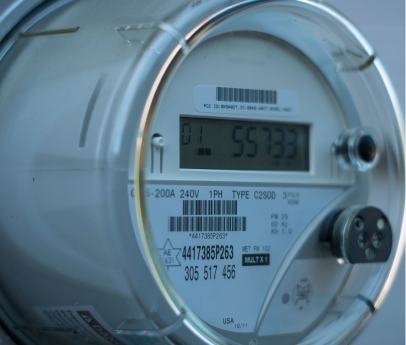
A smart meter is a digital electricity meter that records your energy usage at regular intervals and automatically sends that data to your energy supplier. Unlike traditional meters, which only provide a single cumulative reading at the end of the year, smart meters show you exactly when and how much electricity you have used. This is the basis for dynamic energy tariffs, and where the real potential for savings begins.
Read time:
6 mins
Table of contents:
•
The energy landscape is changing rapidly. Electricity prices are more volatile than ever, renewables are transforming the grid and households are seeking smarter ways to manage their bills. Traditional meters simply can't keep up; they provide one figure at the end of the month with no information about when or how energy was used. Smart meters change that. They capture your usage in granular detail, making it visible and opening the door to dynamic pricing. In short, smart meters are a cornerstone of the transition to a cleaner, more flexible energy system.
So, what exactly is a smart meter?
A smart meter is a digital meter with built-in communication capabilities. While older meters simply accumulate a total, smart meters record your consumption at regular intervals and automatically send that data to your supplier – so there's no need for manual readings or estimated bills.
In Great Britain, the current generation of smart meters (known as SMETS2) communicates via a secure national network called the Data Communications Company (DCC). They record usage in half-hourly settlement periods, which aligns with how electricity is traded on the wholesale market.
How does a smart meter work in practice?
A smart meter system has two main components:
Smart meter (the meter itself): Records your electricity (and often gas) usage precisely, in regular intervals.
Communications hub (the gateway): Sends your usage data securely to your supplier and the DCC network.
Via your supplier's app or online portal, you can view your own consumption data in near-real time.
This means:
Your supplier knows how much energy you're using throughout the day, not just at the end of a billing period.
You can monitor your usage yourself and spot patterns you'd otherwise miss.
Suppliers offering dynamic tariffs – where prices shift hour by hour – can bill you accurately based on exactly when you consumed energy.
Tariffs such as Octopus Agile demonstrate what can be achieved when smart meter data is utilised. Without a smart meter, the ability to pay less during low-demand periods or even get paid to use electricity when the grid has a surplus simply wouldn't exist.
The benefits of smart meters: a closer look
Transparency: finally understanding your bills
Instead of an annual statement full of confusing information, smart meters show you exactly when your biggest energy users kick in. Many people are surprised to discover that old fridges, tumble dryers and devices left on standby quietly consume far more electricity than expected.
Dynamic tariffs: unlocking hour-by-hour pricing
Without a smart meter, you cannot have a dynamic tariff – it's that simple. Precise usage data is the only way to accurately settle an hourly or half-hourly priced contract. Without it, your supplier has no way of knowing when you actually used your electricity during the day.
Save money by shifting when you use energy
If you're on a dynamic tariff, moving flexible loads to cheaper periods can result in significant savings. For example, an electric vehicle that needs 20 kWh topped up overnight might cost £3–4 to charge at 2 am, versus £7–8 during the early evening peak. Over the course of a year, this can make a meaningful difference.
A greener grid: use energy when it's cleanest
Electricity is often cheapest – and lowest-carbon – when there's plenty of wind or solar power available. By shifting your consumption to these times, you're helping to absorb renewable energy that would otherwise be wasted. It's a small but genuine contribution to a cleaner grid.
Traditional meter vs smart meter: what's the difference?
Feature
Traditional meter
Smart meter
Reading interval
Annual or monthly
Every 30 minutes
Data transmission
Manual meter read
Automatic & encrypted
Usage transparency
No details
Real-time or daily view via app
Dynamic tariffs
Not possible
Essential requirement
Sustainability impact
Low
High (usage can be shifted)
Data privacy and security
A common question is, 'Who can see my data?' That’s a fair question. In Great Britain, smart meter data is governed by strict Ofgem rules and data protection legislation (UK GDPR).
Key protections include:
All data transmitted via the DCC network is encrypted end to end.
Half-hourly data can only be accessed by authorised parties – your supplier, your network operator, and Ofgem for regulatory purposes.
Your detailed consumption data cannot be used to build advertising profiles or sold to third parties without your consent.
You can choose how frequently your meter shares data – daily, monthly, or not at all (though opting out means losing access to dynamic tariffs and accurate billing).
In short, smart meters in the UK are operated within a well-regulated framework that is designed to protect consumer privacy.
Costs and installation
Smart meters in Great Britain are provided and installed free of charge by your energy supplier. There is no upfront cost and no ongoing meter rental fee; the cost is recovered through the wider energy system.
You can request a smart meter from your supplier at any time and they are obligated to install one. Installation typically takes around an hour and your electricity (and gas, if applicable) will be briefly interrupted during the process. For most households, the savings available through dynamic tariffs and more conscious energy use far outweigh any indirect costs.
Where is the UK with smart meter rollout?
The UK government began rolling out smart meters in 2011, and the second-generation SMETS2 meters became the standard in 2018. By the end of 2025, over 40 million smart meters had been installed across Great Britain, covering more than half of all homes.
From 2024, Ofgem has required all energy suppliers to offer at least one dynamic tariff to customers with a smart meter. This regulatory change has led to a new range of flexible products, meaning the value of having a smart meter is greater than ever.
The bottom line: smart meters as a gateway to smarter energy
Smart meters are much more than just a modern replacement for an old dial. They are the infrastructure that makes a more flexible, transparent and sustainable energy system possible. For UK households, this means a clear path to lower bills through dynamic tariffs, greater insight into energy usage, and the opportunity to play an active role in balancing a grid that is increasingly powered by renewables.
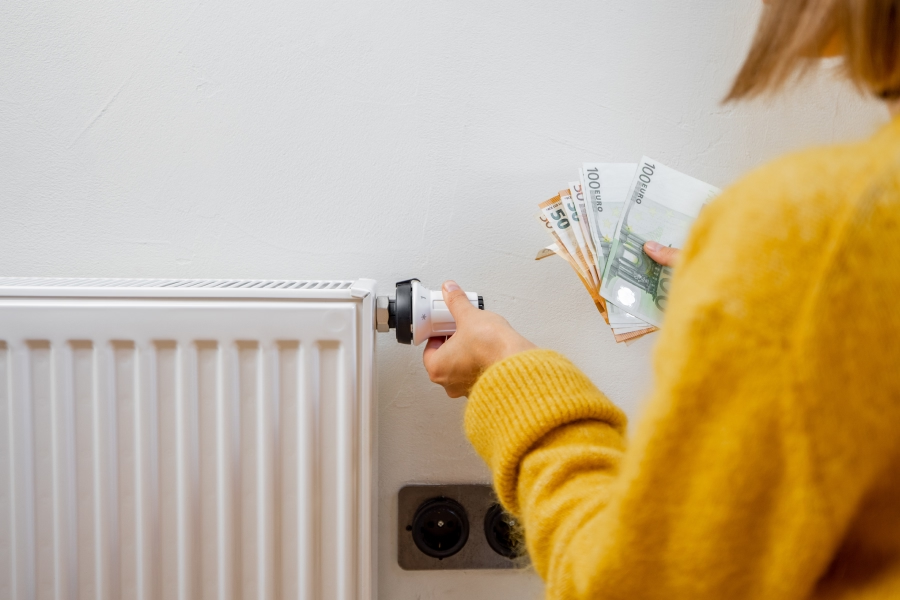
If you don't have a smart meter yet, it's worth requesting one from your energy supplier. Once you have one, the next logical step is to pair it with a smart thermostat, giving you control over both when and how much energy you use.
FAQs
Am I required to have a smart meter in the UK?
No – smart meters are not mandatory for households in Great Britain. However, your energy supplier must offer you one and will periodically contact you to arrange installation. You can accept or decline. If you refuse, though, you'll miss out on dynamic tariffs and will likely continue receiving estimated bills unless you submit manual readings.
Do dynamic tariffs only work with a smart meter?
Yes. Dynamic tariffs price electricity by the hour or half-hour, so precise consumption data is required at these intervals. A traditional meter only records a running total, so there's no way to know exactly when you used the energy during the day. Therefore, accurate time-of-use billing simply isn't possible.
How does my smart home benefit from a smart meter?
Smart meters provide the data that smart home devices need to intelligently optimise energy use. With a tado° smart thermostat, for instance, you can programme your heating to run at times when electricity is cheapest, meaning you're not only warming your home more efficiently, but also at the most cost-effective time of day.