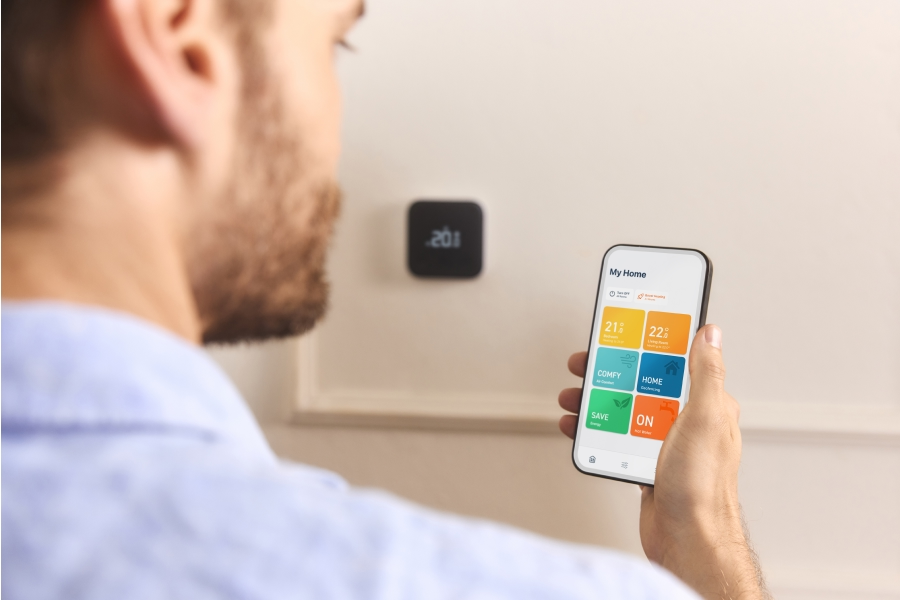
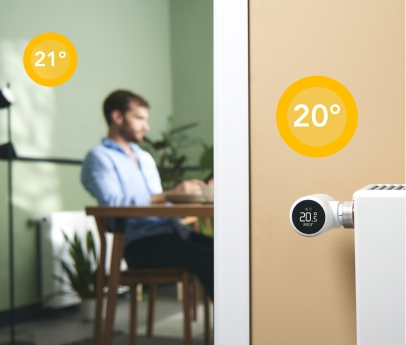
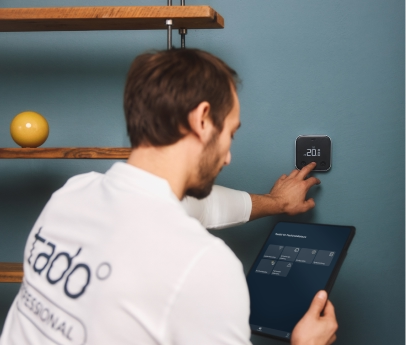
Smart heating adds connected devices, like a smart thermostat and smart radiator thermostats, to your existing heating system. A hub or bridge links these devices to the internet, so you can control your heating from an app on your smartphone. The app also gives you smart automations and features, like schedules and presence detection. Smart heating works with most systems, including boilers, radiators, and underfloor heating. A study by the Fraunhofer Institute for Building Physics found smart heating controls can cut heating energy use by 8–19%; tado° users even save an average of 22%¹ heating costs.
Read time:
13 mins
Table of contents:
•
What is smart heating?
Smart heating combines two things: hardware you add to your home, like a smart thermostat or smart radiator thermostats on individual radiators, and intelligent software. The hardware connects to a hub or bridge that links everything to the internet.
The app is where you then control everything remotely from your smartphone and use automations: setting schedules for different rooms, detecting when the house is empty and reducing the heat, or pre-warming before you get home. Systems like tado° can even detect open windows and pause heating automatically.
Over time, those automations add up to meaningful energy savings.
What is a smart thermostat?
A smart thermostat is a connected device that replaces your existing thermostat on the wall and/or on your radiators. It connects to the internet and your phone, giving you access to smart features like controlling the temperature from anywhere, creating heating schedules for each room, geofencing and more. Smart heating is the whole system.
How does smart heating work?
Let’s start with the hardware and understanding the components of a smart heating system.
Components of a smart heating system
A complete smart heating system consists of several components, each of which plays a distinct role. You won’t need to get them all immediately. Most systems are modular and can be expanded over time. Once you start to see the impact of the system, you can simply add more components to your setup. A more advanced setup does mean higher potential savings. A fully automated setup in every room will ultimately help you achieve the highest possible energy savings.
Replaces your existing room thermostat; controls the boiler/underfloor heating and measures room temperature.
Hub or bridge
Connects your devices to the internet and app.
Smart Radiator Thermostats (TRVs)
Replaces traditional TRVs on individual radiators; enable per-room control.
Temperature sensor
Provides an independent room temperature (and humidity) reading, separate from the radiator.
Wireless Receiver
Wired to the boiler; connects your heating system to the app and cloud (instead of a hub/bridge in a wireless setup).
Smartphone
Enables you to use apps to remotely control your smart heating system.
Components of a smart heating system
What devices you need exactly depends on your existing heating setup. Most brands sell starter kits built around common setups. Our starter kits include everything you need to get started. The tado° product finder can also confirm exactly what fits your home.
Wireless communication between devices
Smart heating devices communicate with each other and with a central hub that connects your system to the internet. The radio protocol they use affects reliability, range, and battery life, and it's worth understanding before you buy. The three main types are:
Wi-Fi: Devices connect directly to your home router. It’s simple to set up, but can be power-hungry. Battery-powered devices such as TRVs need recharging more frequently, and performance can suffer in homes with thick walls or congested Wi-Fi networks.
Zigbee / Z-Wave: Low-power mesh protocols where every mains-powered device acts as a signal repeater, extending range across the home. Zigbee operates on the 2.4 GHz band, while Z-Wave uses sub-GHz frequencies that penetrate walls more effectively. Both have been reliable smart heating standards for over a decade.
Thread: A newer, IP-native mesh protocol designed specifically for IoT devices. Like Zigbee and Z-Wave, Thread creates a self-healing mesh network. If one device goes offline, data is automatically rerouted. Unlike its predecessors, Thread doesn't require a separate hub to translate protocols, which reduces latency and improves reliability. Thread is one of the core communication layers underpinning the Matter standard, which is fast becoming the industry default.
Smart heating features: what can it actually do?
The features available vary between different brands. The following are the main capabilities that are worth understanding:
Remote control
Remote control is the base of any smart heating system. This is a simple yet handy feature. It allows you to adjust the temperature from anywhere you are. For example, when you’re returning from work, on vacation or just too lazy to get up from the sofa.
Heating schedules
Rather than forcing a rigid daily programme on you, smart heating apps usually let you create different schedules for each day of the week. In systems with room-level control, you can even create different schedules for each room. For example: You only heat your home office from 9am to 5pm on weekdays and save energy during weekends. The living room could be set to a lower temperature after 11pm, rather than heating it all night. Meanwhile, your bathroom could be preheated just in time for your morning shower! Using your heating only where and when it is needed helps to significantly save heating costs.
Multi-Room Control
A standard room thermostat controls the boiler based on the temperature in one location – usually a hallway. Every other room just gets whatever heat results from that. Smart radiator thermostats replace the traditional valve heads on individual radiators, giving each room its own target temperature and schedule. The boiler only runs when at least one room is actively calling for heat. Each room calls for heat on its own, so it reaches its target temperature independently of what's happening elsewhere in the house.
In practice, this means your home office heats during working hours, your bathroom warms up before your morning shower, and rooms you rarely use stay cooler without affecting the rest of the house. Multi-room control pays back fastest in larger homes, but it's just as useful in any home where rooms are used differently throughout the day.
In the tado° system, this smart integration between the room thermostats and boiler is called Room Link.
Presence detection and Geofencing
This is one of the biggest differences between smart heating and conventional heating. Geofencing uses your smartphone's location data to detect when everyone has left the house and automatically turns down the heating to save energy. Some smart heating brands like tado° take this further and start preheating the house as soon as you're on your way back, so it's warm by the time you arrive.
Open Window Detection
Opening a window while the heating is running wastes energy quickly. Heat escapes outside while the boiler keeps firing to compensate for the drop.
Some smart heating systems, including models from Bosch and Homematic, require a sensor fitted to the window frame to detect when it's open. tado° identifies an open window from the rate of temperature and humidity change, without any extra hardware. A room cooling gradually over an hour reads as normal. A sharp drop of a degree or two within minutes means a window is open. When that happens, tado° pauses heating automatically.
Energy monitoring and reports
Some smart heating systems include an app-based energy overview showing when your heating was on, for how long, and how this compares to previous periods. Higher-end systems provide detailed breakdowns by room and month, cost estimates and savings comparisons. These reports are useful for understanding your consumption patterns and how you can save energy.
tado° Care & Protect adds another layer here. It can spot issues with your heating system and then notifies you and helps you fix it.
AI and predictive heating
The latest generation of smart heating systems goes beyond schedule-based automation. AI-driven systems analyse patterns in your behaviour and your home's thermal characteristics, such as how quickly different rooms heat up and cool down and how they respond to changes in the outdoor temperature. They then optimise your heating without requiring manual input. The goal is to achieve the right temperature in your home while using the minimum amount of energy.
tado° tip
The free tado° app already includes a lot: remote control, Smart Schedules, Room Link, full Matter integration with your smart home, and step-by-step installation guides. If you want to go further, tado° AI Assist unlocks the automations that drive even bigger savings like Geofencing, Adaptive Heating and Preheat Before Arrival.
How much you save depends on the system you chose, what you're replacing and how much waste your current setup produces.
tado° tip
A typical European home spending around €2,208 a year on gas heating could save approximately €485 annually with tado° – based on the average 22% saving across our user base. Actual savings depend on household energy use and may vary.
Realistically, this number can be lower or higher depending on how effectively you use tado°. For example, AI Assist users save up to 55%2 more compared to the free tado° app.
How does smart heating integrate with a smart home?
The Matter standard
Matter is a universal communication standard backed by Apple, Google, Amazon, and Samsung, among others. Its purpose is straightforward: a Matter-certified device works with any platform that supports the standard, without compatibility issues or workarounds. A Matter-certified thermostat can be controlled through Apple HomeKit, Google Home, Amazon Alexa, and Samsung SmartThings.
Thread is the wireless protocol that runs underneath Matter – a low-power mesh network where every mains-powered device strengthens the signal across the home. Together, Thread and Matter are becoming the baseline for new smart home devices. Systems built on both – like tado° X – are compatible with any ecosystem that supports the standard today, and will remain so as platforms evolve.
For anyone evaluating a smart heating system now, that future-compatibility is worth factoring in. Choosing a Thread and Matter system means you're not tied to one ecosystem and won't need to replace your heating hardware if you change platforms later.
Voice assistant control
Matter compatibility also brings voice control through Alexa, Google Home, and Siri. You can adjust temperatures, check what a room is set to, or confirm whether the heating is on – without picking up your phone. It's a small but practical addition for any household that already uses a voice assistant day-to-day.
What does smart heating cost?
Hardware costs
A basic Smart Thermostat starter kit (thermostat + bridge) typically costs between €100 and €200. Adding Smart Radiator Thermostats runs approximately €50–€100 per radiator, depending on the brand and whether you buy multi-packs. A full setup for a three-bedroom home with five radiators could cost €350–€700 in hardware.
Installation costs
For systems like tado°, you install it yourself using the step-by-step guidance built into the app, so there's no professional installation fee to budget for.
Professional installation typically costs €100–€250 for a straightforward setup, more for complex multi-zone systems. It's worth considering for older properties, systems with non-standard wiring, or anyone uncomfortable with basic electrical work.
Return on investment of smart heating systems
Smart heating is one of the few home upgrades with a clear payback period. Based on the average 22%¹ saving across the tado° user base, for a typical EU household spending around €2,200 on gas, that's approximately €485³ a year, enough to recover the cost of most starter kits within a few months.
Is smart heating compatible with my home?
Gas and oil boilers
Most smart heating systems work with gas and oil boilers – combi, system, and heat-only. Before buying, use the manufacturer's compatibility checker to confirm your specific boiler is supported. The tado° product finder covers most boiler models and tells you exactly which kit you need.
Radiators
Smart Radiator Thermostats fit directly onto individual radiators and can be used on their own or alongside a wall thermostat. They also work without a boiler connection – useful in flats with communal or district heating, where you want control over individual radiators without access to a central system. A starter kit with one or two Smart Radiator Thermostats and a Bridge is enough to get started.
Heat pumps
Heat pumps run most efficiently at low, consistent flow temperatures over long periods – which makes smart controls particularly valuable. The Heat Pump Optimizer by tado° supports the steady-state operation heat pumps need to reach their rated efficiency.
Grid integration extends this. Dynamic tariff support lets the system read live electricity prices and carbon intensity, pre-heating during off-peak hours when electricity is cheap and adjusting when grid demand rises.
tado° Balance handles this automatically for heat pump users – factoring in your electricity tariff, outdoor temperature, and Photovoltaic (PV) system if you have one, to run your heat pump at the lowest possible cost.
Underfloor heating
Water-based underfloor heating heats up and cools down slowly, so smart controls need longer pre-heat lead times to compensate. Most leading systems support underfloor heating, but the setup is more involved than a standard radiator system.
The future of smart heating: AI and predictive heating
Smart heating is a mature technology, and meaningful development is still happening. AI is driving the most meaningful advances in smart heating, and the shift is already underway.
Using AI, smart heating systems can learn your routines and habits to automatically adjust and optimize your heating. They read how quickly each room in your specific home heats up and cools down, track how your routines shift across seasons, and calculate precisely when to start heating, improving accuracy the longer the system runs.
tado° already delivers this through AI Assist. It handles Geofencing, Adaptive Heating, Preheat Before Arrival, and Open Window Detection automatically, and users who enable it save up to 55%² more than the tado° average.
How to choose a smart heating system
The right system depends on your home, your heating setup, and which features matter to you. A few things are worth checking before you buy.
1. Compatibility with your system
Before buying, check the manufacturer's compatibility tool – tado° has one here where you enter your current boiler or heating system and it tells you exactly what you need. tado° is compatible with most systems, and if you're only looking at Smart Radiator Thermostats, they come with a wide range of adapters to fit most radiator valves straight out of the box.
2. App quality and usability
The app is your primary interface, so it needs to work reliably day-to-day. Look for clear scheduling, a readable home screen, dependable notifications, and useful energy reports. Check recent App Store and Google Play reviews before deciding – they surface real-world reliability issues that product pages won't. The tado° app is rated 4.6 stars on the App Store.
3. Smart home integration (Matter)
If you have or plan to build a wider smart home setup, check for native Matter support. A Matter-certified system like tado° X works with Apple Home, Google Home, Amazon Alexa, and Samsung SmartThings.
4. Design
A smart thermostat sits visibly on your wall, so dimensions and finish matter. Some devices are compact and discreet; others are larger. Smart Radiator Thermostat heads also vary considerably in size – check physical dimensions and real-world photos before committing.
5. Installation complexity
Some systems require professional installation, depending on your boiler setup. Replacing a wired thermostat typically takes longer than installing a wireless one. Smart Thermostats from tado° are designed for DIY setup, with helpful visual guides in the tado° app taking you through the installation step-by-step. Adding Smart Radiator Thermostats to radiators requires no wiring at all and is really easy to do yourself.
Most manufacturers publish installation videos worth checking before you buy.
Is smart heating right for you?
Most homes still run on a basic timer or thermostat. It’s a simple switch that doesn't require a renovation or major technical knowledge. One smart thermostat is enough to start, and the system can grow room by room from there. So for most homes, it's worth the upgrade.
tado° works for households that want precise room-by-room control and detailed energy usage data, and equally for those who simply want to install it once and leave it running in the background without further thinking about it. The setup is the same either way.
The tado° product finder helps you quickly identify the right product for your home in just a few clicks.
¹Based on internal data averaged across all tado° customers, collected up to 30/11/2023.
2Up to 55% more savings are based on internal modelling comparing the use of tado° AI Assist vs the free tado° app. Actual savings depend on household characteristics, usage patterns, and external factors.
3Actual savings depend on household energy use and may vary. €485 annual savings reflect 22% of the EU average gas heating bill (€2,208) as reported by Eurostat for 2024, based on our user base average. Results may differ.
FAQs
Do I need to be tech-savvy to use tado°?
No. Installation is guided through the app, tado° walks you through each step based on your specific boiler, and is easy to do for anyone. Check your local regulations on electrical work before installing. Once installed, the system works straight away with nothing else to set up. For those who want more, room-by-room scheduling, detailed energy reports, and AI-driven automations are all there in the same app.
Is smart heating worth it?
For most homes, yes – particularly those still running on a basic timer or thermostat with no presence detection. The average tado° user saves 22% on heating costs¹. At that rate, most starter kits pay for themselves fast. Beyond the financial case, the convenience of remote control, automatic scheduling, and not heating an empty home has day-to-day value that's harder to quantify. The homes that benefit least are those already running a modern, well-optimised system – though even then, smart controls add convenience and room-level control that a standard programmer can't match.
Is smart heating good for renters?
Often yes, but check with your landlord first. Smart heating devices can usually be removed and taken with you when you move, and reinstalling your old thermostat is straightforward.