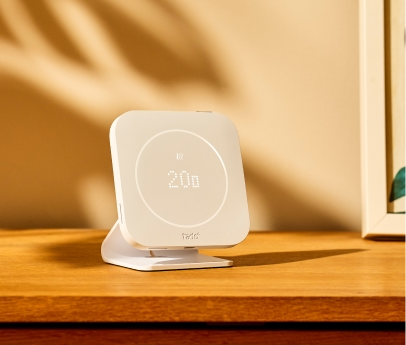
When to turn the heating on: heating season, temperature thresholds and rules for renters
Turn the heating on when the average outdoor temperature stays below your home's heating threshold: from around 15 to 17°C in an older, uninsulated building, or from around 12 to 15°C in a home built to modern insulation standards. In Europe, the heating season roughly runs from October to March, depending on your local climate. Don't put it off for too long: once rooms cool below about 16°C, moisture condenses on cold walls and the risk of mould rises.
Read time:
9 min
Table of contents:
•
When does the heating season start?
There's no single start date for the heating season. In Europe, it roughly runs from October to March: that's usually the period Europe-wide heating statistics cover, though it depends on your local climate. In Germany, for example, the heating season usually runs from 1 October to 30 April. But this is a period set by court rulings rather than by law. If you live in a flat with central heating for the whole building, the start date and heating hours may be set by your building or by local rules. If you rent, your tenancy agreement may say more.
At what outdoor temperature should you turn the heating on?
One useful guide is your home's heating threshold: the outdoor temperature below which your home gets too cold without the heating on. Eurostat assumes that homes need heating once the daily average outdoor temperature drops below about 15°C. The actual threshold for your home depends on how well it's insulated. The better the insulation, the longer your home holds on to its warmth and the later in autumn you'll need to turn the heating on.
Building type
Turn the heating on from about (outdoor temperature)
Built before 1977
15 to 17°C
Built 1977 to 1995
14 to 16°C
Built after 1995
12 to 15°C
Low-energy house
11 to 14°C
Passive house
9 to 11°C
Source: heizung.de
The building years follow German insulation standards, so treat them as a rough guide if you live elsewhere.
How do you know it's time to turn the heating on?
3 signs tell you it's really time:
Your rooms are below 18°C in the morning for several days in a row.
Drops of water form on the inside of your windows in the morning. That means the air in the room is too humid for the cold surfaces.
The forecast shows several days with an average temperature below your home's heating threshold (see the table above).
tado° tip
Check the average temperature over the whole day before you decide. Even with a sunny 18°C afternoon, a 6°C night will still leave your home cold.
When do renters have to turn the heating on?
That depends on the country you live in and on your tenancy agreement, so check your national tenancy rules or ask a local tenants' association. In Germany, for example, renters have no legal obligation to heat their home, but they must make sure that not heating doesn't damage the flat, for example through mould or frozen pipes. German law also sets no clear minimum temperature for landlords, so courts decide: many expect landlords to make at least 20°C possible in living spaces between 6am and 11pm, with around 18°C accepted at night.
Is it worth waiting before you turn the heating on?
When you start heating also affects your heating bills. Every day you reach for thick socks and a blanket instead of the thermostat, you save energy.
What happens if you turn the heating on too late, or not at all?
Mould: moisture tends to settle on cold outside walls, around window frames and behind wardrobes.
More energy to warm up: cold walls have to absorb heat again before the room feels warm.
Frost damage: when it freezes, pipes in unheated rooms can freeze and burst.
What's the right temperature for each room?
The ideal room temperature depends on how you use the room. The International Energy Agency and the European Commission point out that the average home in the EU is heated to over 22°C, while many people would be comfortable at 19 or 20°C. They also suggest adjusting the temperature to the type of room. In Germany, for example, consumer energy advisers recommend:
Room
Recommended temperature
Living and dining area
19 to 21°C
Bathroom
21 to 24°C
Bedroom
about 18°C
Rarely used rooms
not below 14 to 16°C
Source: Verbraucherzentrale Energieberatung
Should you heat rooms you don't use?
Yes, but only a little. The International Energy Agency and the European Commission recommend turning the heating down in rooms you're not using. Don't let them get too cold, though. In Germany, for example, consumer energy advisers recommend not letting rooms such as a guest room or a storeroom drop below 14 to 16°C. Also, keep the doors to these rooms closed. Temperature differences of more than 5°C between rooms can lead to mould: if you leave the door open, warm, humid air can drift into the cooler room and condense on the walls.
Should you leave the heating on or off when you're out?
How far to turn it down depends on how long you will be gone. In Germany, for example, the Federal Environment Agency recommends about 18°C for the night and when you're out for a few hours. If you're away for a few days, you can go down to about 15°C, although German consumer energy advisers actually suggest never going below 16°C.
How much turning the heating down at night saves depends on your home. In Germany, for example, consumer energy advisers estimate that in a detached house, it can save 5 to 12% of heating energy. With underfloor heating, it's less worthwhile: underfloor heating already runs at lower temperatures and reacts slowly to new settings.
Situation
Recommendation
At night
Turn down to about 18°C, and not below 16°C
Out for a few hours, for example a working day
Turn down to about 18°C
Away for a few days, for example over the weekend
Turn down to 15 to 16°C
Airing the room
Turn radiators off and open the windows wide for about 5 minutes
You can turn the heating off in spring once it's been warmer outside than your home's heating threshold for several days. In most homes, that's in April or May. If you leave the heating in normal mode over the summer, it can still come on during cool nights.
How do smart thermostats help with all this?
Smart thermostats take care of a lot of this for you day to day, so you don't have to think about it as much. Smart thermostats like tado° measure the room temperature, heat to a schedule you set and turn the heating down when nobody's home. That's convenient, and it saves energy too.
How tado° helps you get more out of your heating:
Room-by-room control: every room you equip with tado° gets its own temperature and its own schedule. You set these with the Smart Schedule in the free tado° app. The bathroom can warm up only in the morning and the living room only in the evening, for example, and you'll save energy the rest of the time.
Control from anywhere: with the free tado° app, you can turn the heating up or down while you're out, for example if you're staying out later than planned or coming home early.
Save energy while you're out: Geofencing (part of AI Assist) uses your smartphone to detect when everyone has left home and turns the heating down. Before you get back, tado° warms your home up again.
Air rooms without wasting heat: Open Window Detection (part of AI Assist) pauses the heating when you open a window.
No frost damage: frost protection from tado° kicks in before the temperature drops below 5°C, even if the heating is switched off in the app.
Keep an eye on your indoor climate: Air Comfort (part of AI Assist) shows you the humidity and temperature. When the humidity rises, you know it's time to air the room or turn the heating up a little.
Spot faults early: Care & Protect (part of AI Assist) monitors your heating and lets you know in the app if something's wrong. At the start of the heating season, you'll see sooner whether your heating system is running properly after the summer.
When is the latest you should turn the heating on?
Turn the heating on at the latest when your rooms have been below 16°C for several days. Otherwise, the risk rises that moisture forms on cold walls and mould starts to grow. The World Health Organization names 18°C as a safe indoor temperature during the cold season.
Is it cheaper to turn the heating off at night?
Turning the heating down to about 18°C at night, and not below 16°C, is cheaper than keeping it at daytime temperature, but switching it off completely usually isn't a good idea. Once the walls cool down, it takes a lot of energy to warm the room up again in the morning, and the risk of mould rises. In Germany, for example, consumer energy advisers estimate that turning the heating down at night saves 5 to 12% of heating energy in a detached house, and much less with underfloor heating.
At what outdoor temperature should you turn the heating off in spring?
Turn the heating off once the average outdoor temperature over the day stays above your home's heating threshold, which is between 9 and 17°C depending on the building. In most homes, that's in April or May. If your own boiler or heat pump also heats your hot water, switch it to summer mode instead of off.