New rules for heat pumps and wall boxes in Germany
§14a EnWG requires grid operators and consumers to manage major electricity consumers such as heat pumps and wall boxes more flexibly in the future, so that the power grid remains stable even as demand grows. In return, households receive reduced grid fees, divided into three modules: Module 1, a flat-rate discount, Module 2, a consumption-based discount and Module 3, a grid-dependent dynamic discount. For most households, Modules 1 and 2 are currently the most relevant. Module 3 requires smart meters and dynamic electricity tariffs, which are not yet widely available.
Read time:
2 mins
Table of contents:
•
Anyone currently looking into heat pumps, dynamic electricity tariffs or smart meters (as of June 2026) will sooner or later come across terms such as “Module 1”, “Module 2” or “Module 3”. They often appear in letters from grid operators, in electricity tariffs or in energy apps, but they are rarely explained clearly.
The basic idea is actually quite simple:
Germany needs to adapt its power grids because more and more households are using heat pumps, wall boxes and battery storage systems. These devices consume a lot of electricity and can place greater strain on the grid at certain times. That is why new rules have been introduced to define how such devices will interact with the electricity grid in the future.
In return, consumers can benefit from lower grid fees.
What is §14a EnWG?
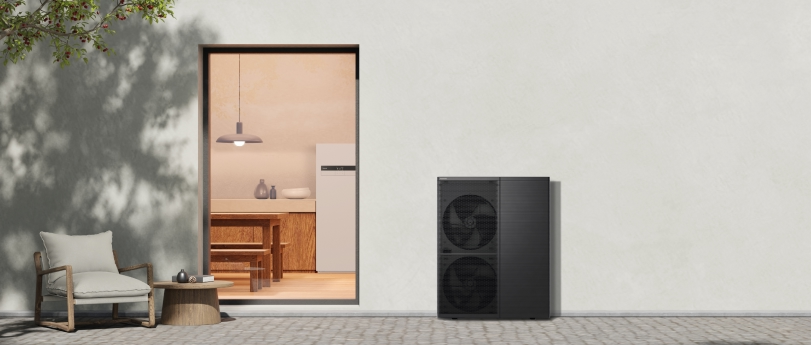
Behind the modules is a new regulation in the German Energy Industry Act, usually referred to “§14a EnWG”. It applies to what are known as controllable consumption devices. This refers to larger electricity consumers such as heat pumps or wall boxes.
The idea behind it is that grid operators may control these devices to a limited extent in certain situations in order to keep the electricity grid stable. In return, consumers receive financial benefits. Importantly, this does not mean that devices can simply be switched off at will. The regulation is primarily intended to prevent regional overloads in the electricity grid.
What do Modules 1, 2 and 3 mean?
The three modules describe different models for reduced grid fees.
Module 1: Flat-rate grid fee discount
Consumers receive a fixed discount on grid fees, regardless of when the electricity is consumed.
Technically, this model is easy to implement. In many cases, the existing electricity meter is sufficient, and additional complex technology is often not required.
A typical example is a single-family home with a heat pump. The household receives a fixed reduction in grid fees without any noticeable change in everyday use.
Module 2: Consumption-based discount
Here, the relief is more closely linked to the actual electricity consumption of the heat pump or another controllable device.
This usually requires a separate electricity meter that can record the consumption separately. The model can be particularly worthwhile for households with higher electricity consumption, because the savings are more directly linked to actual usage.
One example is a household with a large heat pump and high heating demand. Because the electricity consumption is measured separately, the reduced grid fee component can be applied specifically to this consumption.
Module 3: Grid-dependent discount
In this model, grid fees change depending on how heavily the electricity grid is being used at any given time. When plenty of electricity is available and the grid is under little strain, costs can fall. During periods of high load, however, they increase.
The idea is to shift electricity consumption more strongly towards cheaper periods. For this to work, modern technology is required, such as smart meters, dynamic electricity tariffs and systems that can respond flexibly to such signals.
A simple example would be a heat pump that preferably runs when electricity is currently cheaper or when the grid is less heavily loaded. This can help the household achieve lower electricity costs in the long term.
Why is Module 3 such a hot topic right now?
Module 3 is considered an important step towards intelligent electricity grids. In the long term, consumers should be able to align their electricity consumption more closely with cheaper periods.
In practice, however, this topic is still in its early stages in many places. One reason is the rollout of smart meters in Germany. Many households currently do not yet have the technology required to make meaningful use of variable grid fees.
In addition, heat pumps, energy management systems and electricity tariffs must also work together technically. This is exactly why many providers currently mainly support Module 1 and Module 2.
Which module is relevant for most households today?
At present, Modules 1 and 2 play the biggest role. Both models are comparatively easy to implement and usually require significantly less technical infrastructure than Module 3.
Module 3 is considered particularly exciting for the future, but it requires modern metering technology, flexible electricity tariffs and intelligent control. It will likely take some time before these systems are available nationwide.
Even so, it is already worth understanding the differences today. As heat pumps and electric vehicles become increasingly widespread, this topic will become even more important in the coming years.
Which modules does tado° Energy currently support?
As of June 2026, tado° Energy (available in Germany and Austria) supports Module 1 and Module 2. This means users can already benefit from reduced grid fees today, depending on their individual setup, either through the flat-rate relief provided by Module 1 or through the consumption-based solution offered by Module 2.
Module 3, by contrast, is still being developed. This is not only due to individual systems or providers, but also because additional requirements must be met, such as smart meters, dynamic grid fees and stronger integration between grid operators, electricity tariffs and energy management systems.
Support for Module 3 is also already planned at tado° Energy. The aim is to focus even more strongly on intelligent and flexible energy use in the future, especially in combination with dynamic electricity tariffs and modern smart home systems.
FAQs
When will Module 3 arrive, and is it worth waiting for?
Module 3, the dynamic, grid-dependent tariff, is not yet available nationwide. It requires a smart meter, which is being gradually rolled out as a mandatory installation in Germany by 2032. For households with annual electricity consumption of more than 6,000 kWh, this rollout will happen sooner. Anyone already operating a heat pump today should therefore not wait: Modules 1 or 2 can already deliver savings now, while Module 3 can be added later.
Which devices fall under the rules of §14a EnWG?
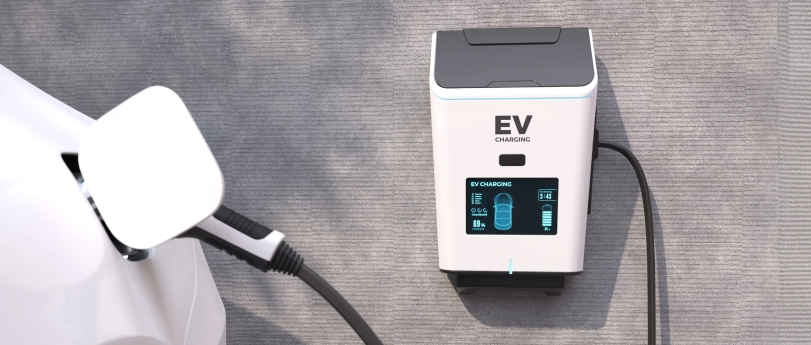
§14a EnWG applies to what are known as controllable consumption devices, meaning larger electricity consumers that can be controlled flexibly over time. These include heat pumps, wall boxes for electric cars, air conditioning systems and battery storage systems. Important: this refers to devices with a connected load of more than 4.2 kW. Smaller household appliances such as washing machines or dishwashers are not covered.
How does §14a EnWG affect my heat pump?
Your heat pump can be temporarily throttled by the grid operator in exceptional situations, but it cannot be switched off completely. A minimum output of 4.2 kW must always be guaranteed. In practice, this happens rarely and is barely noticeable. In return, you pay permanently reduced grid fees, depending on the module selected, either as a flat-rate discount or based on your actual consumption.